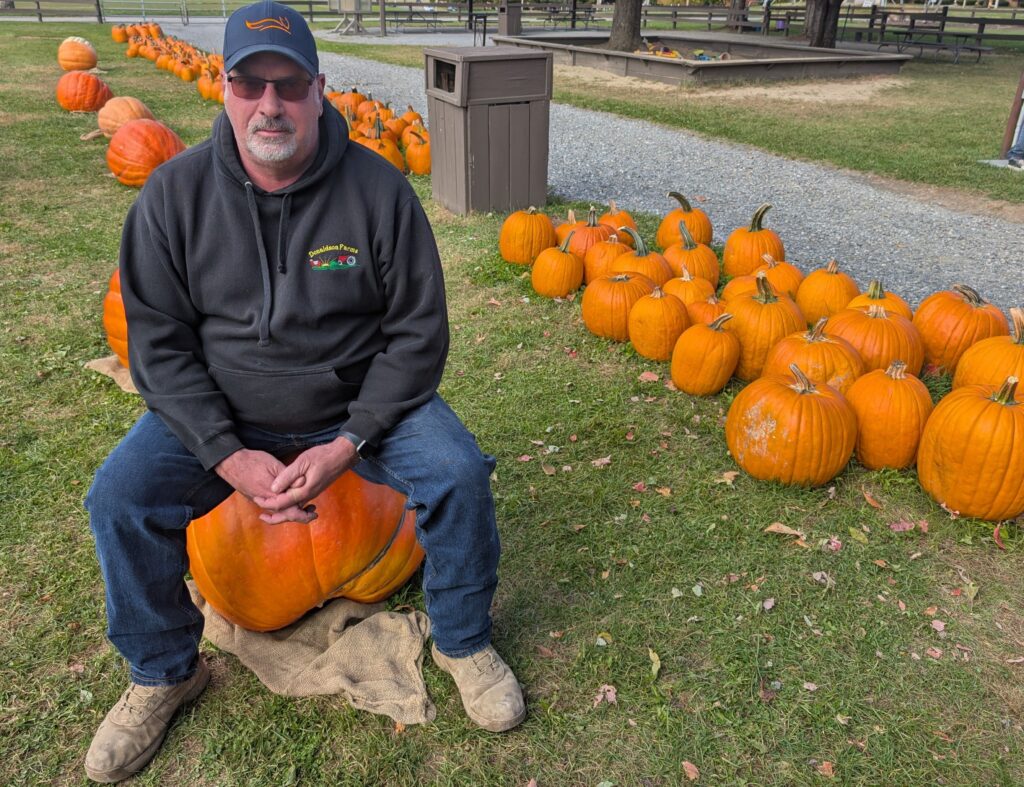
(FLANDERS, N.J.) — Bright, tree-ripened tomatoes, apples with the perfect crunch, and pumpkins the size of a toddler are some of the products that draw crowds to local farms in New Jersey. Horses, goats, and rabbits romp through coarse hay and the scent of freshly baked bread wafts out the doors of the market. Lush scenes like this belie the fact that the state has been locked in drought watches for over a year.
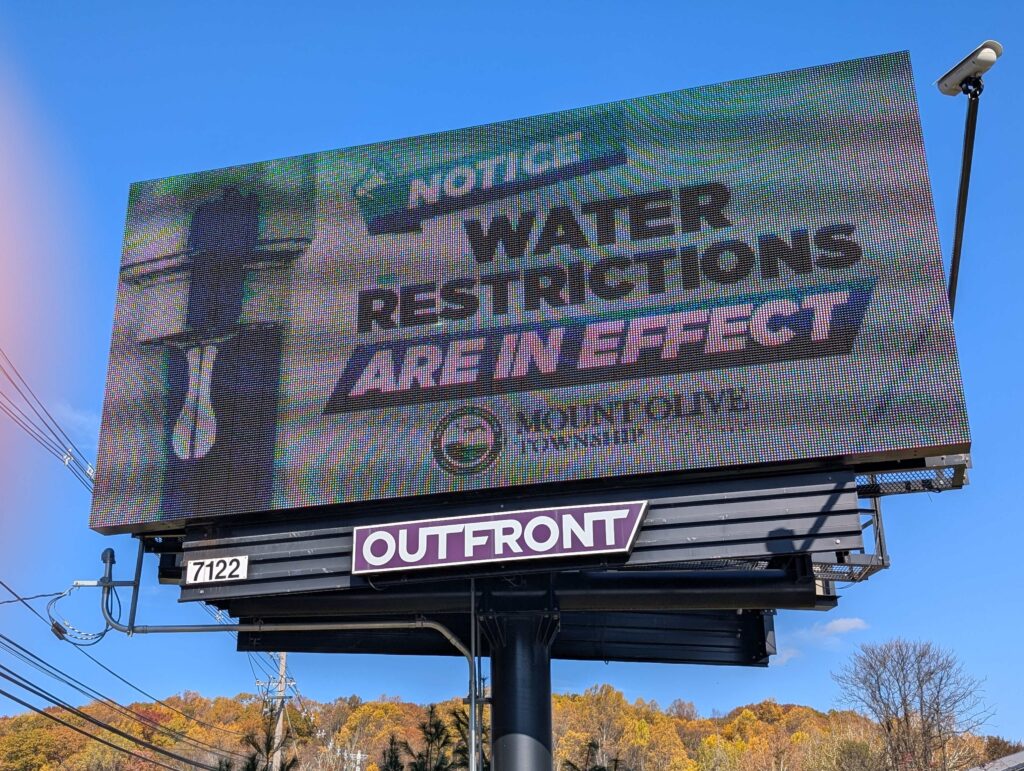
Mount Olive Township instituted water restrictions in August 2025 and notifies residents via a billboard on Route 206. [Credit: Carley McDonald]
A general lack of rainfall since Oct. 2024, led Gov. Phil Murphy to declare drought watches for the last year. Citizens have been asked by the N.J. Department of Environmental Protection to reduce their daily water usage by as much as 65%. News releases announcing the watches come with instructions on how to voluntarily conserve water to protect groundwater levels and agriculture.
While some home gardeners have had difficulty maintaining their fruits and vegetables as well as their typical lifestyles, several farmers in the northern part of the state welcome the dry weather. Unlike regular citizens, farmers are exempt from water restrictions by the state and have not felt the need to conserve water due to habits and irrigation systems that they already have in place.
Those who are struggling
According to members of Garden State Gardeners, a Facebook group of 21,000 members who share their gardening journeys, there have been other concerns. Gracie CanRy, a home and professional gardener, told The Click that the lack of consistent rainfall has been harmful. “Big rains dumping an inch or more after no rain caused runoff, difficult soil conditions, and some issues specific to certain crops,” she said. “As an example, tomatoes burst in these situations. Fertilizer and nutrients wash out, so I used more fertilizer this year.”
CanRy also mentioned the importance of collecting runoff rain from gutters and sheds in barrels to water her plants, something that follows the Murphy Administration’s guidance on how to conserve water.
Alissa Paz, a central Jersey resident in her first year of gardening, purchased a 55-gallon rain barrel to do just the same after her water bill increased over the summer.
“Next year I will be setting up multiple rain barrels around my house,” she said. “I’ll be using drip hoses throughout the gardens. Collecting the rain will not only benefit the environment but also my wallet.”
However, this is not the story for all N.J. citizens, some of whom prefer dry skies.
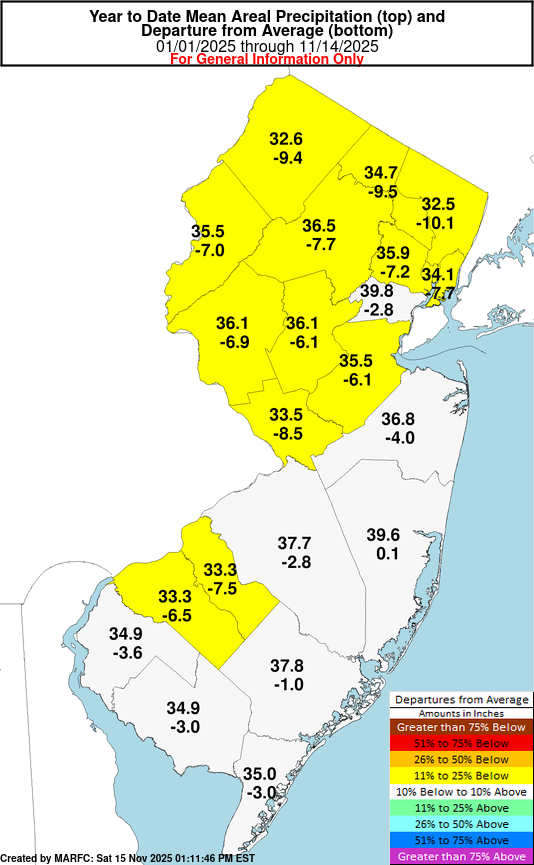
Rainfall has been below average through all of N.J. this year. [Credit: National Weather Service]
Greg Donaldson, a farmer who helps to manage several hundred acres of land around the state, primarily in Hackettstown, told The Click that the little rainfall that Donaldson Farms received in 2025 was enough to keep their produce from withering.
“We would rather have it on the dry side,” he said. “We can irrigate some. If it gets real dry, we can’t irrigate enough [and] sustain the crops. But we were pretty lucky this year. We got a couple showers a lot of people didn’t get, and that was able to sustain us through the growing season.”
Not only did it rain enough for Donaldson Farms to continue irrigating, the spring actually produced too much water for them, forcing the employees to plant pumpkins three weeks late. There was no noticeable change in soil quality with the dry weather, except for a few days after rainfall where the soil was too wet for the farmers to go out into the fields. The Donaldson Farms drip irrigation system allows for produce to receive only the amount of water needed to keep the plants alive without over-watering, meaning that they don’t waste the now finite resource or damage their crops.
Donaldson also told The Click that because the farm’s location in Hackettstown is also a retail site, wet weather conditions are bad for sales. “Business is good when it’s dry,” he said. “Anytime we have a rainy day, customers just don’t come out. Last year was very dry in October. We had the best pumpkin and apple season that we ever had.”
Alstede farms’ irrigation systems allow for healthy crops to grow despite low rainfall numbers. [Credit: Carley McDonald]
As weather goes, frost is a bigger concern than drought, he said. “We had a couple threats of frost and freeze. We’re crop producers growing a lot of small fruit and tree fruit. Once we’re in bloom it’s a really huge threat for us. It’s one of our biggest threats. I would say freeze threat has a much bigger impact on us than drought.”
Between both farms, there are multiple tools and systems used to disperse water, such as drip irrigation, overhead irrigation, solid sprinklers, and a hard hose traveler with an irrigation gun. Because of these methods of watering, they have not needed government subsidies for disaster assistance or risk management. “We have irrigation everywhere,” said Alstede. “We just work harder and spend more money, but we have crops.”
The drought watch
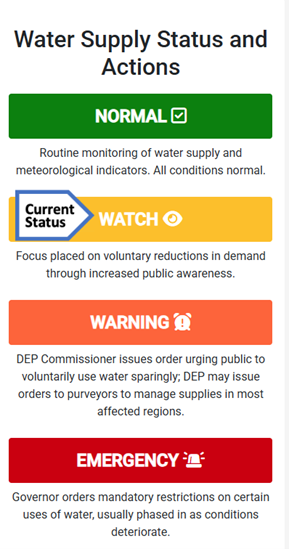
The N.J. Department of Environmental Protection uses four levels to inform the public of how severe drought conditions are. [Credit: N.J. D.E.P.]
Although the state is not taking action against anyone who fails to reduce their water consumption, some cities are encouraging conservation. Since Aug. 13, Mount Olive Township has had strict rules in place for the usage of water such as who can water their lawn on which days, prohibiting the washing of structures, sidewalks and driveways, and banning the planting of grass and sod, as well as several other standards. The township encourages anyone observing their neighbors violating the water restrictions to report them to the water department to be issued a fine.
The state Department of Environmental Protection urges residents to conserve water by using commercial car washes rather than washing vehicles at home, sweeping paved surfaces instead of spraying them with a hose, fixing leaks and damaged irrigation systems, taking five-minute showers, running washing machines and dishwashers only when full, and taking several other actions until conditions improve.
The Nov. 26 update from the DEP said that “the extended period of below average rainfall in recent months is showing serious impacts to streamflow, reservoir, and groundwater levels.” New Jersey residents are encouraged to continue closely monitoring their water usage, especially when using it outdoors.
Science behind the drought
Anthony Broccoli, a distinguished professor of Atmospheric Science in Rutgers University’s Department of Environmental Sciences, said that the year of drought watches is not a long term trend. Since last October, New Jersey has had periods of dry weather, as well as periods of normal and above average rainfall. But recently, New Jersey, with the exception of a few counties along the coast, has seen 25% to 50% below normal rainfall.
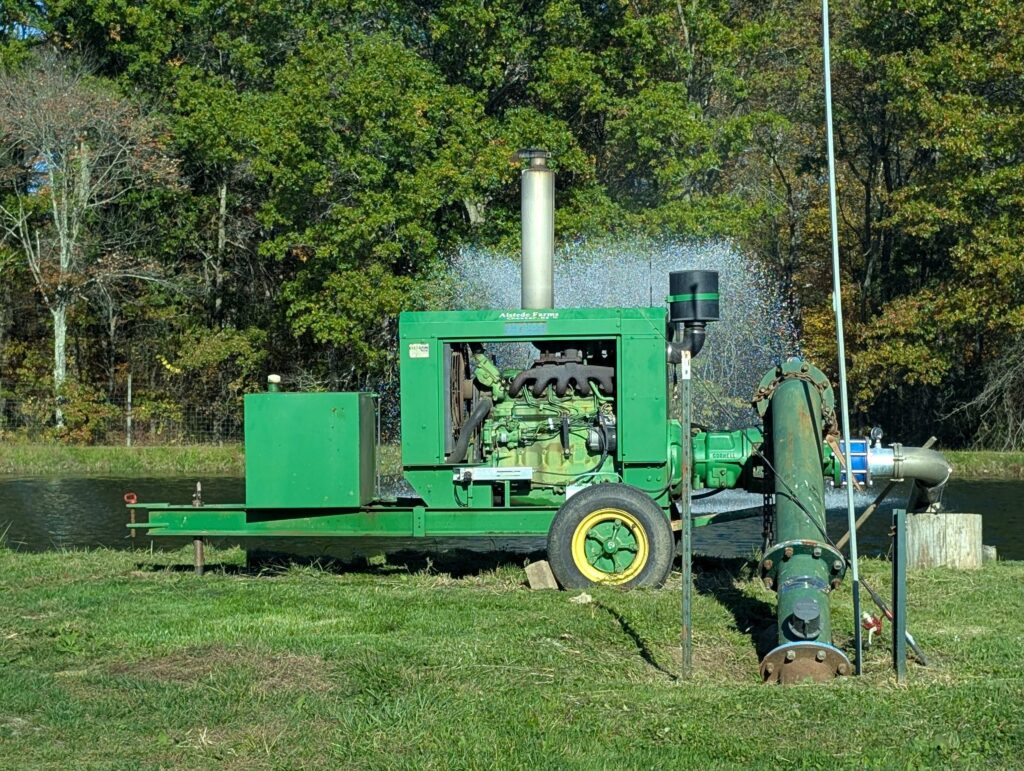
Alstede Farms uses two irrigation ponds with pumps as part of their watering system. [Credit: Carley McDonald]
The bigger worry is a “flash drought,” which could become more common, he said. A flash drought is “when it doesn’t rain as much as it would on average for a couple or three months,” he explained. “It’s not a long term drought, but it’s still important enough to be impactful for agriculture. In a warming climate, there are indications that these flash droughts will happen more often. Part of the reason is when the world is warmer, that makes water evaporate from the soil and from plants more rapidly, so things dry out more quickly.”
With the possibility of flash droughts becoming more frequent and the DEP’s notice of stream and groundwater levels being impacted, local farmers may eventually be forced to make a change to their habits to assist in conserving water.
Related Posts

October 6, 2026
COVID Took Their Sense of Taste and Smell. Years Later, There Are Scant Answers
An estimated 400 million people worldwide have long COVID. Dismissed by doctors and told there's no cure, they're pressing for answers and finding strength together.
September 16, 2026
Find Your Zen and Save the Planet in New Jersey
Duke Farms, a 2,700-acre nature preserve in Hillsborough, New Jersey features hiking trails, a greenhouse, native wildlife and more. They also see themselves as environmental stewards, focusing on conservation, sustainability, and responsible farming.