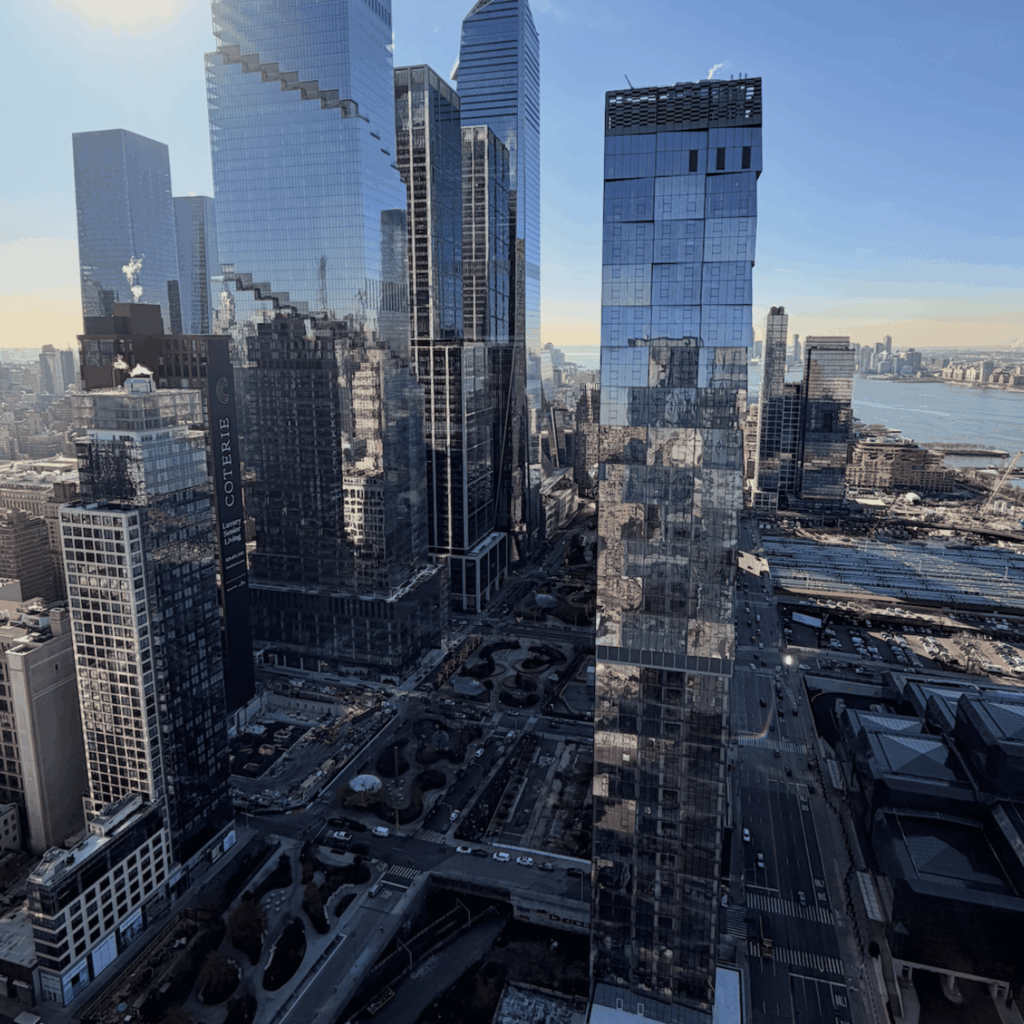
(NEW YORK) — What is now Hudson Yards was once a maze of rail lines, a forgotten industrial area that few New Yorkers bothered to cross. Today, that same stretch gleams with glass towers, luxury shopping and an ambition to redefine urban living.
When Phase I of Manhattan’s Hudson Yards opened in 2019, it marked a new era for Manhattan, a district built on corporate offices, multimillion-dollar homes and luxury towers impressive enough to earn the nickname “Billionaire Playground.”
As Phase II of the redevelopment begins, many residents see the next chapter as a chance to strengthen the neighborhood’s identity. The addition of a public school, parks and community spaces has sparked optimism that the area will evolve into a more vibrant, connected and family-friendly place to live.
Before Hudson Yards
Long before its piercing glass towers lit up the skyline, the site looked nothing like the glittering district it would become. The land was known as the West Side Rail Yard, a storage and maintenance facility for Long Island Rail Road trains, a landscape of open tracks, rusting equipment and steady industrial noise.
Phil O’Brien, founder and publisher of W42ST.com, a hyperlocal news outlet covering Hell’s Kitchen —a neighborhood next to Hudson Yards —moved to the area 11 years ago and remembers it well. “There was no Hudson Yards,” he says. “I would walk across the High Line near the Lincoln Tunnel, and it was quite desolate.”
Hudson Yards Phase I
Beyond a few warehouses and service buildings, the yards remained largely underdeveloped.

The Hudson Yards master plan [Credit: Related Companies and Oxford Properties]
This was only Phase I of the development, which was hailed as “the future of New York” by then-Mayor Michael Bloomberg.
Phase I, which opened to the public in March 2019, was an impressive beginning, spanning 28 acres with a $25 billion dollar price tag. This made it the most expensive private real estate development project in U.S. history, according to Business Insider.
The initial phase included major office skyscrapers, such as 10 Hudson Yards and 30 Hudson Yards, along with luxury residential buildings like 15 Hudson Yards and 35 Hudson Yards.
It also introduced innovative public spaces, such as The Shed performing arts center, the Vessel, a 150-foot tall sculpture, and The Shops & Restaurants at Hudson Yards. This structure made it an area where people could live, work, and shop.
Phase I made it clear that this was “the future” and nothing was getting in the way of that future, not even businesses that were located within the rezoning area.
Manhattan Aquariums, once located at 522 W. 37th St., was one of them. The saltwater aquarium store, which had served the area since 2005, was forced to close in 2023 following a city demolition order.
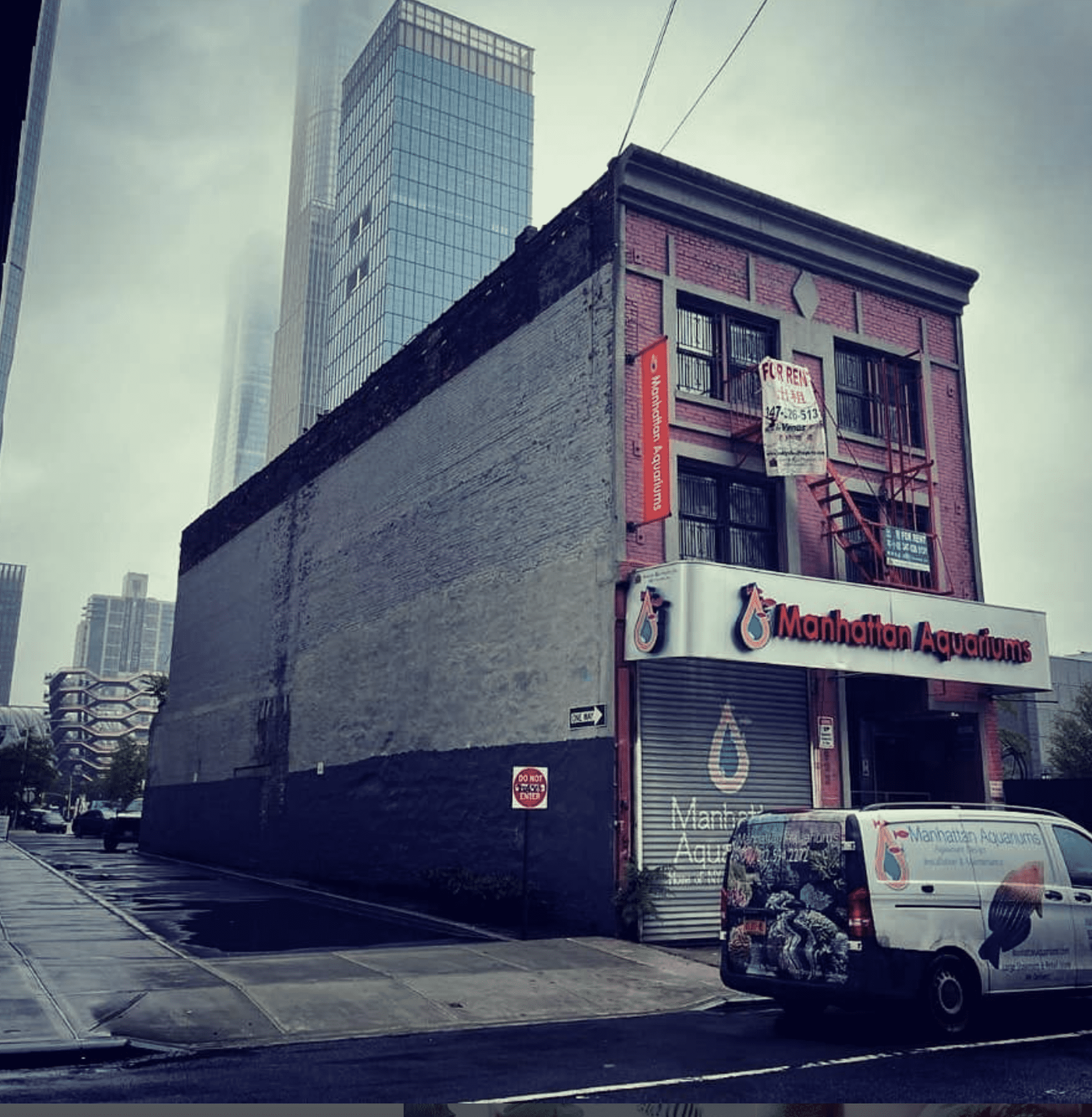
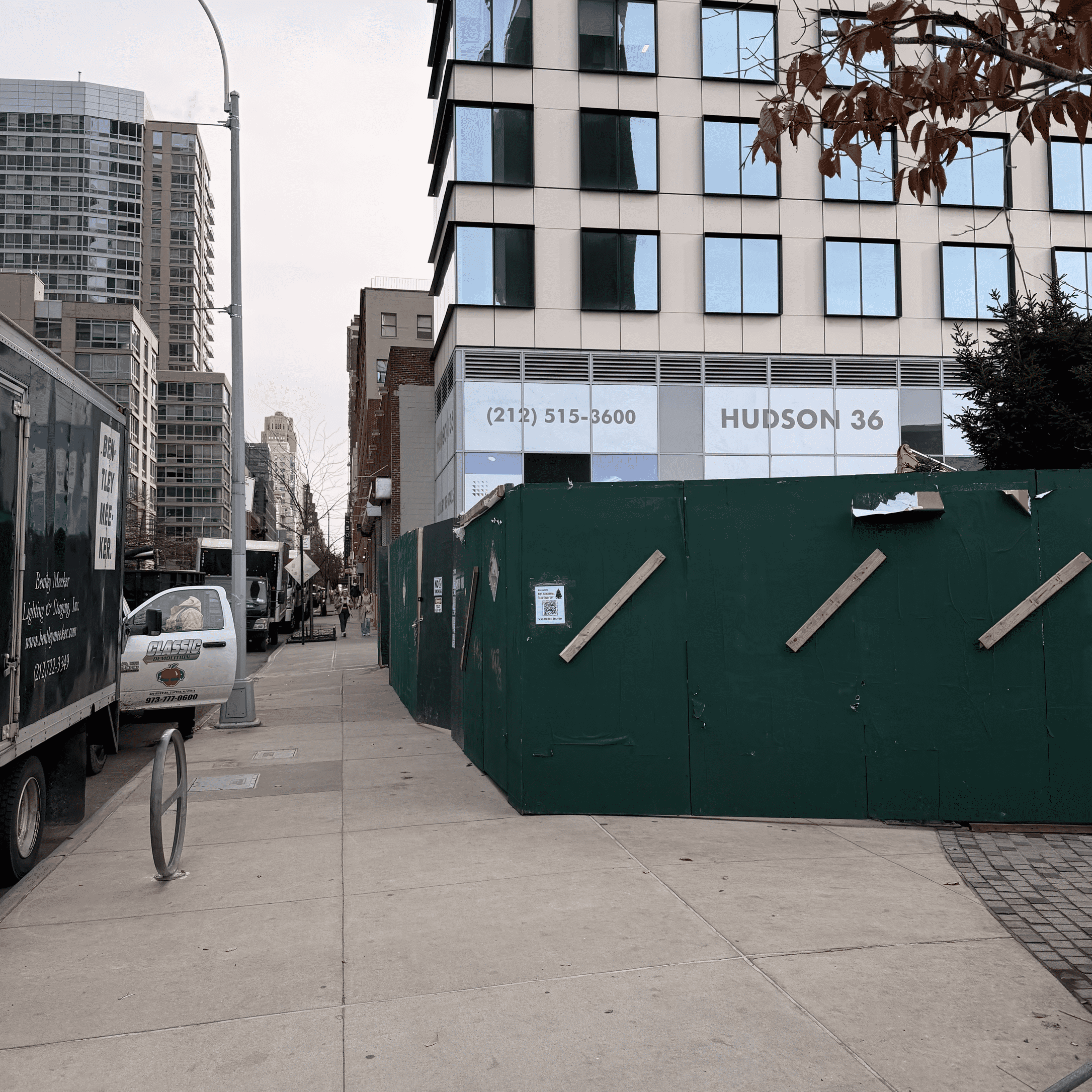
“Eminent domain action by New York City is taking over the site,” the owners wrote in a statement to customers. “After years of uncertainty, one-sided legal actions and taking advantage of the little guy, we didn’t really stand a chance.”
Today, the shop is gone and construction for a new skyscraper is underway as part of Phase II.
Several other businesses along West 37th Street between 10th and 11th avenues, including City Lumber Inc. and Affirmation Arts gallery, were also swept up in the transformation. Today, the block is a patchwork of sealed storefronts and rising construction frames, a streetscape caught between memory and momentum.
Hudson Yards Phase II
Phase II, which broke ground in June, is meant to complete the transformation of the former rail yard. A walk through Hudson Yards shows a neighborhood already reshaped by six gleaming towers, a luxury mall and the reflective, copper-colored Vessel.. The next phase shifts away from the corporate scale that defined the first half of the project.
Instead of focusing on skyscrapers and flagship brands, Phase II aims to cultivate a more community-centered environment. Plans include a new K–8 public school, expanded park space and small-scale retail intended to serve residents rather than luxury shoppers. Developers Related Companies and Oxford Properties describe this stage as creating a “complete neighborhood” that balances design, livability and accessibility.
Behind the glossy renderings, the people who live and work in Hudson Yards say the transition comes with daily inconveniences but also daily hope.
Hope for what’s to come
Matthew Pelle,35, says living near the site means getting used to construction noise.
“The construction gets a little annoying at times,” he says, noting that the noise, detours, and constant activity have become part of his daily routine.
Pelle has lived in the area for a little over a year, choosing it largely for its convenience. “The area was convenient since I work close by,” he explains. But as development for Phase II accelerates, he says it often feels like he’s “living in a construction zone.”
Despite the inconvenience, Pelle is cautiously optimistic about the promises tied to the next phase of expansion. He hadn’t given much thought to the idea of a more “communal” Hudson Yards before, but he is warming up to it.
“Hopefully it will make the area feel less fake,” he says, referring to the gleaming towers that currently dominate the landscape
Community leaders say they, too, are watching Phase II with optimism, particularly when it comes to keeping Hudson Yards active and welcoming at all hours. Daniel Scorse, vice president of operations for the Hudson Yards Hell’s Kitchen Alliance (HYHK), a nonprofit Business Improvement District that cleans, beautifies, and manages public spaces, believes the next phase could help stabilize the neighborhood’s rhythm.
“Once I’m off, I take the 7 Train out of here because there’s not much to keep me around … If things I enjoy open up over here, I’d definitely stay and hang around.”
“It’s nice to know that Phase II will include the completion of the open public space throughout Hudson Yards,” Scorse says, noting that parks and plazas are essential for drawing people in and keeping the streets lively. Foot traffic, he emphasized, is crucial for the area’s businesses. “We want people in the area because that is who is walking into the businesses and buying things.”
For HYHK, vibrancy is a strategy. A neighborhood that thrives during the daytime, nighttime, weekdays, and weekends creates a sustainable ecosystem for retailers, restaurants, and public spaces. “We like things that are mixed,” Scorse explains. “An office worker, a tourist, and a resident all have different needs, and we want to reach everyone’s needs.”
He points out that single-use districts, neighborhoods dominated solely by office towers or nightlife, tend to swing between extremes of overcrowding and emptiness. “When you go to areas that only have offices, it’s dead on the weekend. And when you go to areas that only have nightlife, it’s typically dead during the day.”
Phase II, with its blend of residential units, school construction, parks, and small-scale retail, stands to break that pattern. If the plan unfolds as envisioned, Scorse believes Hudson Yards could finally become the kind of mixed, consistently active neighborhood that New Yorkers naturally gravitate toward.
Tuning out over time
Rodrigo Diaz, a doorman at one of Hudson Yards’ residential towers, says daily construction has become something of an inside joke among residents. “Residents and I joke about the loud construction noises all the time,” he says. “It’s definitely something people just tune out over time.”
When discussing Phase II, Diaz’s tone changes. He becomes noticeably more intrigued, especially about the potential for new establishments. “That’s dope,” he exclaimed.
Unlike those who live in the building, Diaz doesn’t spend time in Hudson Yards outside of his shifts. “Once I’m off, I take the 7 Train out of here because there’s not much to keep me around,” he explains. “I never come this way once I’m off.” But the promise of new restaurants, everyday conveniences, and spaces designed for actual neighborhood life appeals to him. “If things I enjoy open up over here,” he says, “I’d definitely stay and hang around.”
An area that was once overlooked, now stands out. As Phase II moves ahead, Hudson Yards new challenge is to prove if an area grown on top of rail roads can spread communal roots.
Residents, workers, and community leaders are optimistic about the next wave of development. Hopefully, in the coming years, Hudson Yards will no longer be defined by what it replaced but by the community it manages to build.
Related Posts
March 31, 2026
Pain at the Pump: NYC Taxi Drivers Squeezed by Rising Gas Costs
Oil prices have surged amid the war with Iran and disruptions to global supply routes, driving gas prices higher worldwide. In New York City, Taxi and ride-share drivers are feeling the squeeze, as rising fuel costs cut into already tight earnings.
March 9, 2026
The Economic Ripple Effects of Slowing Immigration
How an immigration slowdown could reshape the U.S. Economy.