
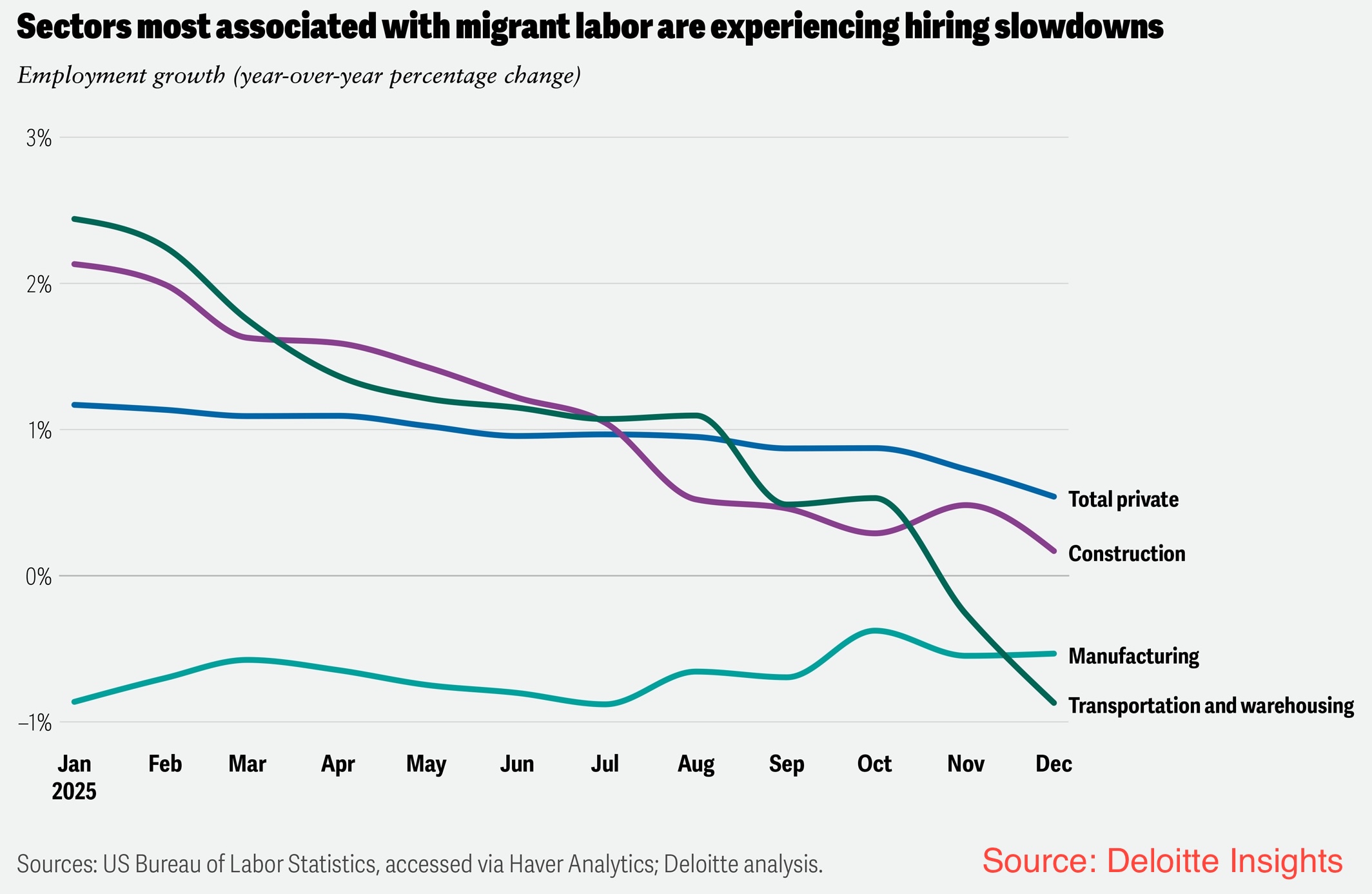
Immigration into the United States surged in the years following the pandemic, helping fuel labor force growth at a time when the country faced widespread worker shortages. But economists say that trend may now be reversing.
Recent data suggests the pace of immigration is beginning to slow as enforcement policies tighten and barriers to entry increase. According to U.S. Census Bureau data, the foreign-born labor force grew at an average annual rate of about 4% between 2022 and 2024—far faster than the roughly 1% growth among native-born workers.
But that momentum appears to be fading. Net migration fell sharply last year, dropping from roughly 2.7 million people in 2024 to about 1.3 million in 2025. Some projections suggest the figure could fall below 350,000 by 2026.
Economists say immigration plays two distinct roles in the U.S. economy, depending on skill level.
Lower-skilled migrant workers often fill labor shortages in industries where employers struggle to recruit enough domestic workers, including agriculture, construction, hospitality, and childcare. When that labor supply tightens, businesses may face higher labor costs, which can eventually translate into higher prices for consumers.
“High-skilled immigration tends to boost productivity and innovation, whereas low-skilled immigration often fills gaps in sectors where American labor supply is limited,” said Liya Palagashvili, a labor economist and director of the Labor Policy Project at the Mercatus Center at George Mason University.
Palagashvili says an immigration slowdown could ripple through the economy in other ways as well. For example, industries like childcare rely heavily on immigrant labor. If fewer workers are available, the cost of those services could increase.
But the impact goes beyond labor supply.
Research shows immigrants play an outsized role in entrepreneurship and innovation in the United States. Studies have found that first- and second-generation immigrants have helped create roughly 40% of Fortune 500 companies. Other research suggests immigrants start businesses at significantly higher rates than native-born Americans.
Because of that, economists often describe immigration policy as closely tied to economic growth and innovation.
As the pace of immigration shifts, economists say policymakers will be watching closely—not just for the effects on labor markets and prices, but also for potential long-term impacts on entrepreneurship and technological development in the United States.
Related Posts

March 31, 2026
Pain at the Pump: NYC Taxi Drivers Squeezed by Rising Gas Costs
Oil prices have surged amid the war with Iran and disruptions to global supply routes, driving gas prices higher worldwide. In New York City, Taxi and ride-share drivers are feeling the squeeze, as rising fuel costs cut into already tight earnings.

February 20, 2026
Too Many Warehouses: Industrial Expansion Meets Community Resistance in a California Town
Perris residents are pushing back against the proliferation of warehouses as city leaders impose a 10‑month hiatus on new industrial development. "How is it possible that a park is boxed by shipping containers?" asked one resident.