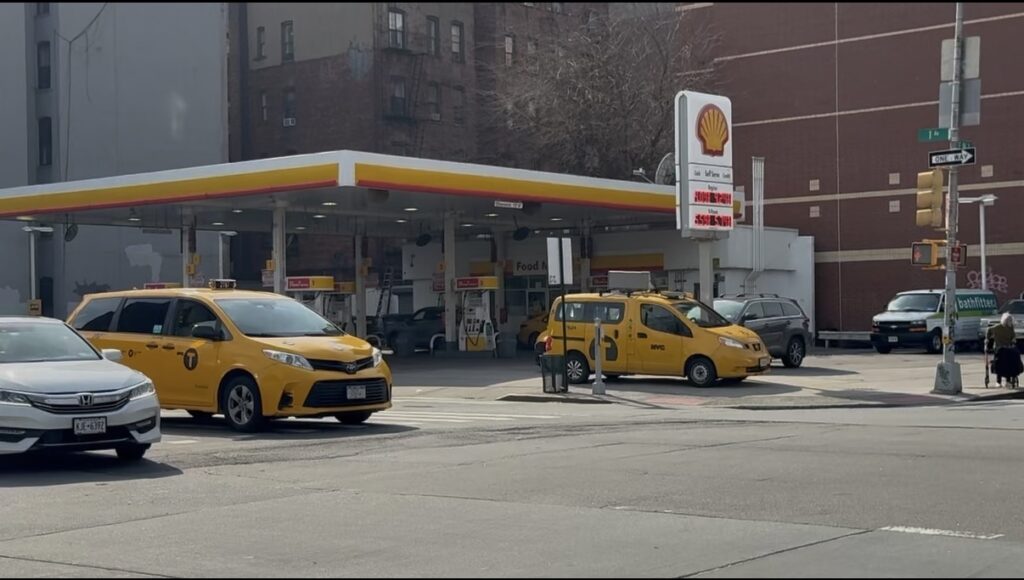
Global oil markets are rattled as tensions tied to the war with Iran disrupt one of the world’s most critical energy chokepoints—the Strait of Hormuz. With a significant share of global crude shipments forced to reroute or delayed, oil prices have surged sharply in recent weeks, climbing from the $70-per-barrel range to over $100.
That kind of move quickly trickles down to consumers.In New York City, the impact is showing up where it hurts most— at the gas pump.
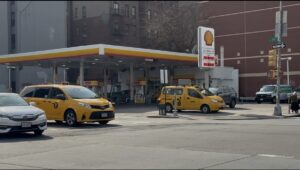
Shell Station, Manhattan, NY
For drivers who rely on their vehicles to make a living, the spike in fuel costs is a direct hit to their bottom line. Taxi and ride-share drivers say the math is getting harder to justify. As gas prices climb, so does the cost of simply staying on the road.
Market analysts often point to a rule of thumb: for every $10 increase in the price of crude oil, drivers can expect to pay roughly 25 cents more per gallon. With oil up more than 50% since the start of the conflict, that adds up quickly—especially for workers who fill their tanks multiple times a day.
For some, the financial strain is becoming unsustainable. Drivers describe working longer hours just to break even, while also facing increased competition and fluctuating demand. The result is higher operating costs paired with uncertain income.
Still, many say stepping away isn’t an option. For those behind the wheel, the only path forward is to keep driving, even as each mile becomes more expensive.
As global uncertainty continues to cloud the energy outlook, drivers in New York—are bracing themselves for the possibility that fuel prices could climb even higher in the weeks ahead.
Related Posts
March 9, 2026
The Economic Ripple Effects of Slowing Immigration
How an immigration slowdown could reshape the U.S. Economy.
February 20, 2026
Too Many Warehouses: Industrial Expansion Meets Community Resistance in a California Town
Perris residents are pushing back against the proliferation of warehouses as city leaders impose a 10‑month hiatus on new industrial development. "How is it possible that a park is boxed by shipping containers?" asked one resident.