An audio version of this story aired on NPR’s Morning Edition on Dec. 11.
(NEW CASTLE, Colo.) — Bouncing up a dry dirt road this fall in western Colorado, Mike Tornes is searching for his cattle. He drives unfazed through deep ruts in the path, passing broad green, orange, and yellow valleys as birds of prey sweep in front of his windshield.
Every spring, Tornes releases between 120 and 140 cows on these 7,000 acres of private land, but it’s inherently risky.
“It takes a … certain kind of dumb, I guess, to be able to throw several hundred thousand dollars out in the woods and say, ‘Come on home when you want to.’”
When Tornes rounded up his livestock at the end of the grazing season in October, he couldn’t find four adult cows and one calf — the worst cattle loss he’s ever seen. Depending on their market value, he said the financial losses could total around $10,000.
Without their carcasses, he doesn’t know what caused their death or disappearance, and he doesn’t want to draw any conclusions. But in the past few years, ranchers like Tornes have been defending their herds from a new predator: wolves.
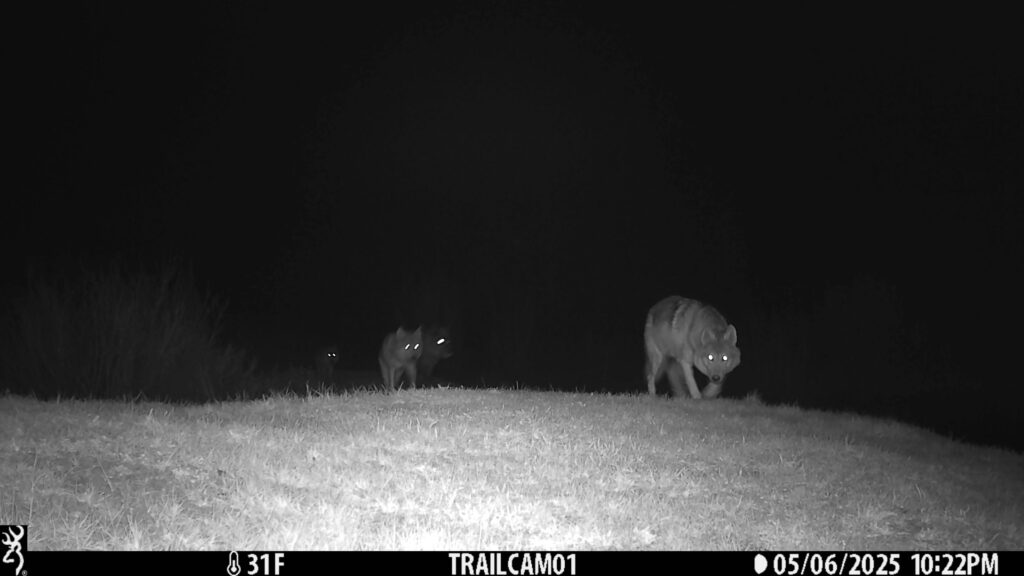
Reintroduced in 2023, gray wolves have spread out across western Colorado, exploring wild landscapes and preying on elk, deer, and occasionally — livestock.
“It is extremely frustrating and hard to swallow,” Tornes said.
Ranchers fought wolf reintroduction before voters approved it in 2020, and many have taken the podium at public meetings with Colorado Parks and Wildlife (CPW), frustrated and begging for more support. The agency has confirmed 66 livestock injuries or fatalities — known as depredations — since wolves were reintroduced two years ago.
To address the problem, Colorado is piloting a program that sends “range riders” to patrol lands where wolves are preying on livestock. While some tout the success of this strategy, several Colorado ranchers are skeptical.
‘On the ground’
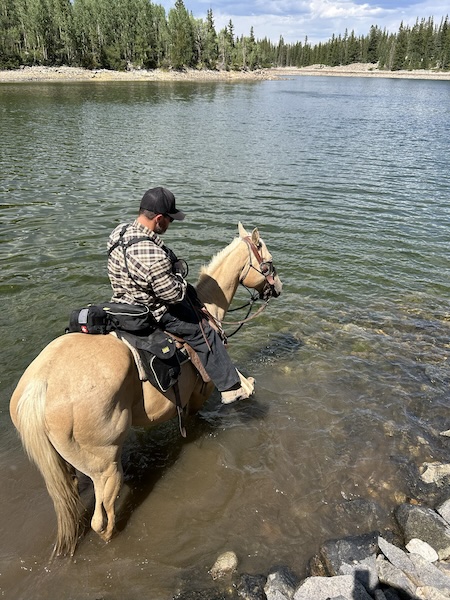
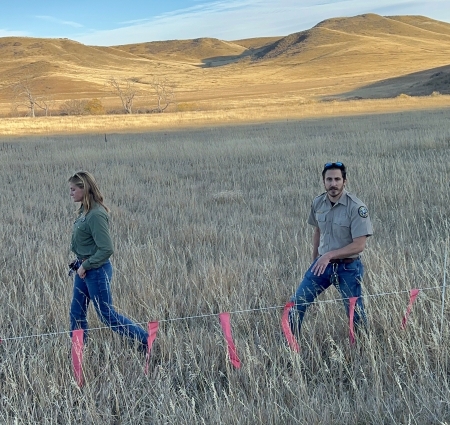
Jesse Lasater wades into a river on horseback in Pitkin County, Colorado. Lasater works to protect livestock in southwest Colorado from wolf attacks, supporting ranchers by developing defensive plans and proactively harassing wolves that exhibit aggressive behavior toward cattle. [Credit: Shelby Neiberger, Colorado Department of Agriculture.]
“We can monitor things quickly and closely on the ground,” he said.
Wolves were aggressively hunted and eradicated from Colorado in the 1940s. in Over the past 80 years—before their reintroduction — only a few had crossed into Colorado from neighboring states. But now, Colorado is home to at least 20 wolves affixed with GPS collars and a few uncollared pups, according to CPW.
Lasater is one of 13 state-employed range riders who help assess where ranchers are vulnerable to wolf attacks. They travel on foot, horseback, or ATVs to set up game cameras, electric fencing, and other equipment that help deter wolves from interacting with livestock.
“[We’re] showing up to the table and saying, ‘Hey, we’re here for you as livestock producers. What can we do to help?’” Lasater said.
Lasater grew up on a sheep ranch in southern Colorado and managed the Southern Ute Indian Tribes’ bison program for nearly a decade. But despite his familiarity with Colorado’s ranching scene, Lasater was reluctant to become a range rider.
“I just thought, ‘Well, that’s too hot of a topic with too much controversy,’” he said.
While wolves play a critical role in food webs, they are also one of the most efficient predators in the West, hunting in packs and preying on larger animals like elk, deer, bison, and — regrettably for ranchers — cows and sheep.
Lasater is confident he and his fellow range riders can help limit livestock losses, but Tornes doubts the program can succeed in Colorado’s rugged terrain with limited funding. Ranchers in other western states have expressed similar concerns.
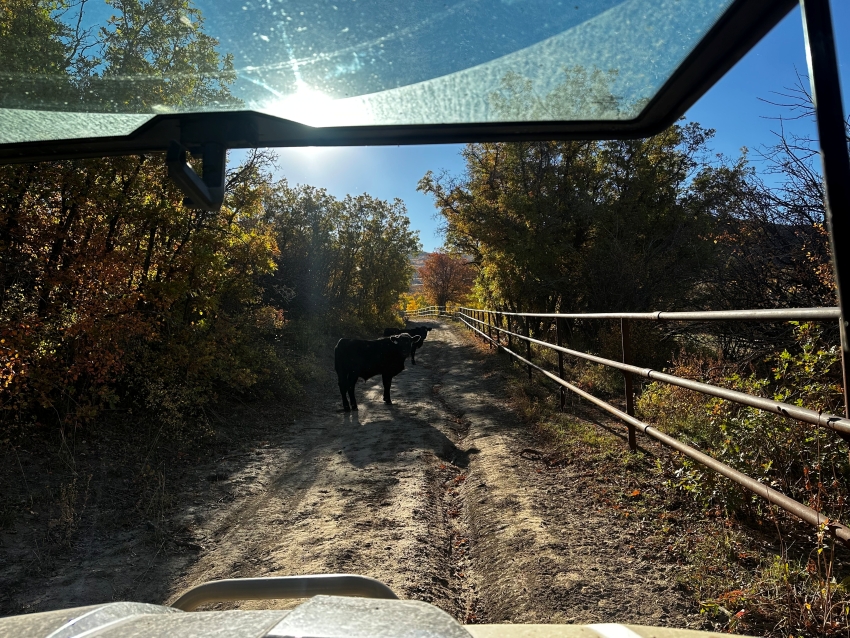
One of Mike Tornes’ cows blocks his ATV outside of New Castle on Oct. 3. Tornes leases 7,000 acres of private land in the area to graze over 100 cattle. [Credit: Halle Zander]
Even before wolves, Tornes said ranching has always been an exceedingly difficult business.
“We are constantly fighting,” he said. “If it’s not water, it’s ground. If it’s not cattle, it’s cattle prices. If it’s not feed, it’s something else.”
Wolves are another stressor, so Tornes helped Colorado Parks and Wildlife vet its first 11 riders last spring, hopeful that the program could work for some properties — just not his own.
Wolves can be tough to spot in some parts of Colorado. While Aspen trees pepper the landscape in some areas, allowing light and sounds to filter through, and flat tops allow for miles of visibility, in other places, thick brush forms a wall behind which all animals disappear.
“We could be 50 yards from a wolf right now, and we would not know it,” Tornes said.
While maneuvering his ATV up the property’s main dirt road in early October, Tornes spooked an unsuspecting cow up a ridge and into the brush. The crowded bushes wove between small trees and blocked his view. Within seconds, she was out of sight.
“We just ran a 1,200-pound cow up there. Can you see her? No,” he said, demonstrating the futile exercise of searching for cattle in a dense thicket.
“We are constantly fighting … If it’s not water, it’s ground. If it’s not cattle, it’s cattle prices. If it’s not feed, it’s something else.” —Mike Tornes
Ray Aberle, however, still sees a lot of potential for range riders to be effective in this kind of terrain. As CPW’s deputy assistant director for the Lands Unit, he helps oversee range riders. Even with less mobility, he said riders have a lot of options for tracking animals.
“Some of it you really can’t — you can’t ride well,” he said. “But what you’re still doing there is you’re still looking for wolf sign[s] and presence.”
In tough-to-maneuver landscapes common in western Colorado’s mountains, riders can track paw and hoof prints on foot, look for scat, survey with drones, and listen for the iconic howl to determine where wolves are moving and gathering. CPW can sometimes provide GPS collar data for nearby wolves, and ranchers can provide intelligence on where cattle prefer to graze.
While Tornes’ property may be challenging to ride, Aberle said that alone wouldn’t prevent CPW from sending range riders to his property if wolves were attacking livestock.
“We would never just say, ‘Well, we just can’t work in this landscape,’” he said.
Aberle conceded that the state won’t recommend range riders for all properties.
First, ranchers have to be willing to work with them, and with only about a dozen riders this year, CPW must be strategic about where to send them.
But this lack of capacity — only 11 CPW range riders and two from CDA responsible for covering millions of acres of ranchland this summer — didn’t sit well with Tornes and played into some of his doubts about how successful the program could be.

Just one tool
Aberle said CPW wants to double its current investment in range riders, hiring 20 to 24 contracted riders in 2026 with money it mostly garnered from the state’s new “Born to Be Wild” license plate.
But he emphasized that range riding is not the only way to prevent wolf attacks. It’s one tactic, and they can improve it.
“[We’re] showing up to the table and saying, ‘Hey, we’re here for you as livestock producers. What can we do to help?’” — Jesse Lasater
Aberle said riders could also use more training on when to haze or scare wolves with strobe lights, bull horns, and pepperball launchers. Similar to paintball guns, they’re filled with capsaicin — the active ingredient in pepper spray.
“If you see a wolf on the landscape just walking by, that’s not a time to haze them,” Aberle said. “Now, you see a wolf that’s walking by, and it actually gets into livestock and starts testing them, then you start to haze them, … to teach them that this is not a behavior that we want you doing.”
He also acknowledged that when the program started, they had to work through some communication issues, since ranchers don’t always know who to call when they have trouble with wolves. Despite ongoing concerns among some ranchers, Aberle thinks they’ve since developed a better system.
“Wildlife damage specialists that are connected to the local community — connected to the landscape — they’ll be doing that day-to-day direction with the range riders,” he said. “When John Smith calls as a landowner and is experiencing this conflict, he’s already going to have a relationship with that local wildlife damage specialist … and so that person then would be in contact with the range rider.”
Over several conversations, Tornes was filled with respect and gratitude for the CPW and CDA staff tasked with wolf conflict mitigation, but he still believes they’ve been set up to fail, given the size of the problem.
He’s a board member for Holy Cross Cattlemen’s Association, which recently signed a petition with other agricultural groups urging CPW to pause wolf reintroductions for one year.
Petitioners want to give CPW time to improve its wolf mitigation programs and its communication with ranchers.
“I don’t understand or see how either side could disagree with the pause,” Tornes said. “In my mind, that is the minimum ask. We’re not asking for hunting seasons. We’re not asking for anything crazy, … just a pause. Let us figure this out.”
CPW’s commissioners rejected a similar petition filed in 2024, but this year’s petition is still under consideration.
Regardless of how CPW responds to the petition or the challenges he faces in deterring wolf attacks, Tornes is throwing himself into the fight. He plans to invest in GPS-tracking collars for his cattle, which would allow him to track and control their movements.
“I’m fine with spending all my money, all my time doing this, because I believe in it,” Tornes said. “I’m happy, you know, like, what else is there?”
Audio: Reporter Halle Zander shared her story of the ranchers and the range riders on NPR’s Morning Edition on Dec. 11.
Related Posts
October 27, 2025
An Idaho Rancher Lives With His Cattle in Wolf Country. Can Colorado Ranchers Do the Same?
After losing more than $90,000 in cattle to wolves in three years, Glenn Elzinga knew it was time to try something different.
October 25, 2025
The Cleveland Zoo Welcomes a Rare Baby Rhino
There are fewer than 583 adult Eastern black rhinos living in the wild.