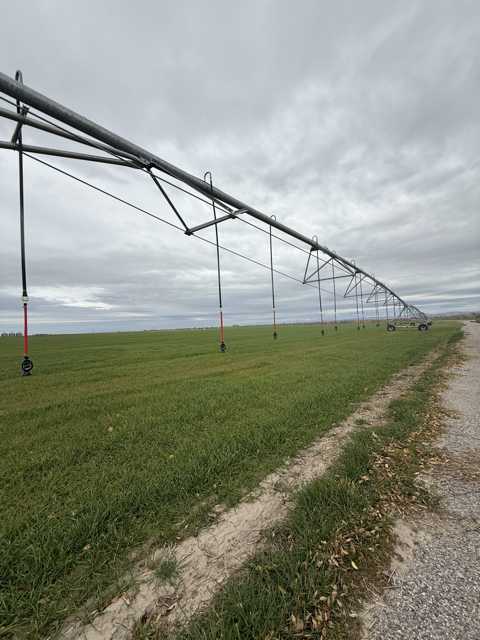
(POCATELLO, Idaho) — Crossing 25 miles of country roads through Idaho farmland, one passes tilled fields lined in rows that stretch toward the skies. Irrigation systems are winterized and shut down. The soil, rich and dark from the fall harvest, seems to breathe after a long season.
Cassaundra VanOrden, farm owner at Garth VanOrden Farms, points out the river, the farmlands, and the memories on these roads made by her family: “That green field behind those trees, that’s ours, we call it ‘Number One’ because it was the first farm my father-in-law bought on his own.” The Garth VanOrden and Wada farms are partners in the nation’s largest supplier of fresh potatoes.
Across town, inside the warehouse of Wada Farms, one of Idaho’s largest fresh potato producers, the hum of conveyor belts and the earthy scents of fresh potatoes filled the air. Production manager Kreighton Honas, leads the way between chutes, rollers, AI-powered potato sorting machines, and sorting lines. About 10 Migrant workers from Mexico are lined up doing additional quality checks and packaging. Honas said, “I’ve never met folks as dedicated as our migrant workers. They come here on an H-2A visa for one purpose, and that’s to work. We’ve been blessed to have generations of the same families return every year.”
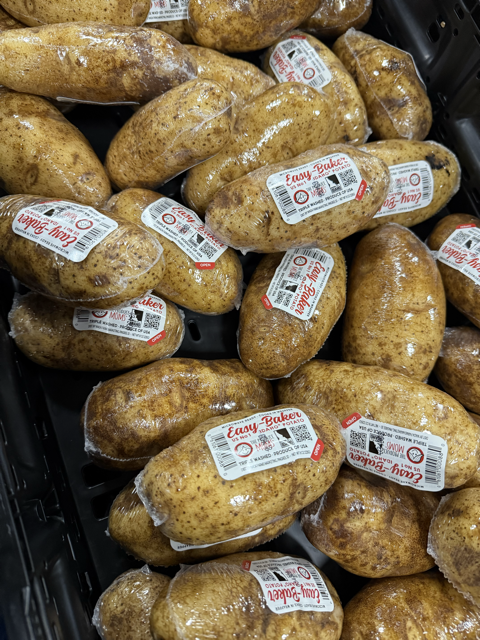
Wada Farms Easy Bake Potatoes [Credits: Nida Mannan]
While the system has worked well for years, rising visa costs, tighter regulations, and unpredictable enforcement threaten to upset that balance for families like the VanOrdens. Farmers have long navigated the program by paying the fees, filing the paperwork, and following federal rules, but lately, the system that once offered stability now feels less certain.
The Roots of Idaho farming
The VanOrden family has been farming in Southeast Idaho for more than a century. Dillon grew up working long days on the 9,000-acre farm, enduring unpredictable seasons, and leading what he refers to as a “farming lifestyle.”
“Farming has an art to it; you’ve got to have it in your blood,” he said. “If you’re doing it because your parents force you, you’ll be miserable. You tear your body down doing it. And we’re doing it to provide food for a world that thinks everything just comes from the grocery store.”
With pride in his family partnerships, Dillon explains how potato farming has evolved over the years. “You need a business background now,” he said. “It’s not the old days of just growing spuds and selling them wherever. You have to have a plan for how to sell them, how to market them, and how to survive the year.”
Farmers are in an economic squeeze right now, and survival is becoming harder. According to the Idaho Farm Bureau Quarterly, Idaho’s net farm income dropped 13% in 2024 and 30% from two years earlier. Production expenses increased twice as fast as what farms produced. The cost of essentials like feed purchase, fertilizer, pesticides, and machine hire, combined overall increased about 23% statewide from the year before. According to the Idaho Farm Bureau Federation 2025 report, which is based on the USDA data, the net farm income was down from $3.7 billion in 2022 to $2.6 billion in 2024.
“The number one issue”
Many Idaho farms face labor shortages. Braden Jensen, director of government affairs for the Idaho Farm Bureau Federation, explained that the problem is widespread. “Labor is the number one issue in every single state,” Jensen said. “Our farms depend on a seasonal workforce, and it’s becoming harder and harder to find enough domestic labor to fill that need.”
To fill the gap, farms recruit foreign labor through the H-2A program which helps agriculture employers meet seasonal or temporary demands when domestic labor is insufficient.
Nationwide, 384,900 H-2A positions were certified in fiscal year 2024, 6,000 more than last year, according to the Farm Bureau Federation. Locally, the Mountain I region which includes Idaho, Montana, and Wyoming, certified 6,295 H-2A positions in 2020 and 10,064 in 2024, according to the USDA National Agricultural Statistics Service.
Dillon said the H-2A program has been essential for Wada Farms. “If I advertised tomorrow that I needed someone to wash my equipment, I wouldn’t get any takers,” he said. “Most of the time, the people doing that work are the guys from Mexico. Nobody here wants to do it.”
“It’s long hours and really hard work. I’m so grateful for our migrant workers,” Cassaundra adds. “We have generations of them, grandfathers, kids, cousins, and whole families who come back every harvest.”
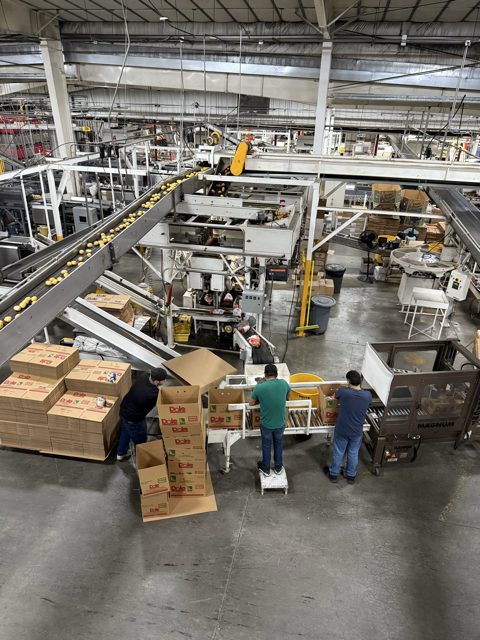
Wada Warehouse packaging line [Photo Credit: Nida Mannan]
The H-2A visa program allows farms to legally hire foreign workers for seasonal work, but it’s far from simple, according to Jensen. It only applies to seasonal operations excluding year-round farming such as dairy farms.
According to U.S. Department of Labor the Adverse Effect Wage Rate (AEWR), similar to a minimum wage for H-2A workers, climbed from $11.75 an hour in 2016 to $16.54 in 2024 suggesting that labor costs tied to the H-2A program will keep rising.
On Oct. 2, the Trump Administration announced a new skills-based AEWR computation model. If housing is provided, that cost is deducted from workers’ wages. The skill-based methodology lowers labor costs for agricultural employers but also wages for migrant workers.
Other costs related to H-2A employment that farmers incur include extensive paperwork, housing inspections, transportation, and legal oversight. According to the Idaho Department of Labor the number of H-2A guest visa workers has expanded exponentially across Idaho from an estimated 3,000 in 2016 to 7,200 in 2023. Given the persistent labor shortages, many growers and industry experts view H-2A as a necessary tool to fill labor needs.
Enforcement, fear, and the future of farm labor
Recent shifts in immigration enforcement and the H-2A administration have intensified uncertainty. On Oct.19, ICE agents raided a horse track in Wilder, Idaho, arresting 105 people on immigration violation charges.
Valeria Soto, an Idaho woman born in the United States to undocumented parents, said the heightened enforcement climate has caused a lot of fear in her community.
“Just because I’m here legally doesn’t mean I’m not scared.” she said. “ I fear for my family. You don’t know if saying ‘love you, have a good day’ might be the last time you see them.”
Families in Soto’s community watched the Wilder incident unfold with shock. “They said they were targeting dangerous people, but they were taking moms, dads, even people who were here legally. It feels like the rules keep changing, and no one feels safe,” she said.
Although places like Wada Farms are following the law, actions like the Wilder raid do impact business, according to Jensen of the Idaho Farm Bureau Federation.
“Farmers do their due diligence with I-9s. If documents seem legitimate, they have to accept them; they cannot demand more without risking accusations of discrimination. With increased enforcement, that puts farmers in a very difficult position,” he said. “We want the H-2A program to stay but it needs reform. If wages or costs get too high, it stops being economically viable. Many farmers are already operating in the red.”
Craving certainty in uncertain times
Reforms would benefit both the farmers and the workers. “We’re dealing with human beings. We’re dealing with policy that hasn’t been fixed in decades,” Jensen said. “Both farmers and migrant workers need certainty.”

A workers’ bunkhouse at Garth VanOrden Farms
[Credits: Nida Mannan]
About a mile from the Wada Farms warehouse, an empty bunkhouse sits quiet after the last workers returned home to Mexico in November. Inside, beds were neatly made, closets still held clothes, shoes, and personal belongings. Coffee machines tucked away and dishes stacked. They left everything behind because they plan to come back.
Whether these workers will be able to return in nine months depends on visas that must be renewed, policies that continue to shift, and a system that grows more uncertain. The fate of the next season now rests on decisions made far beyond these fields.
Related Posts
December 16, 2025
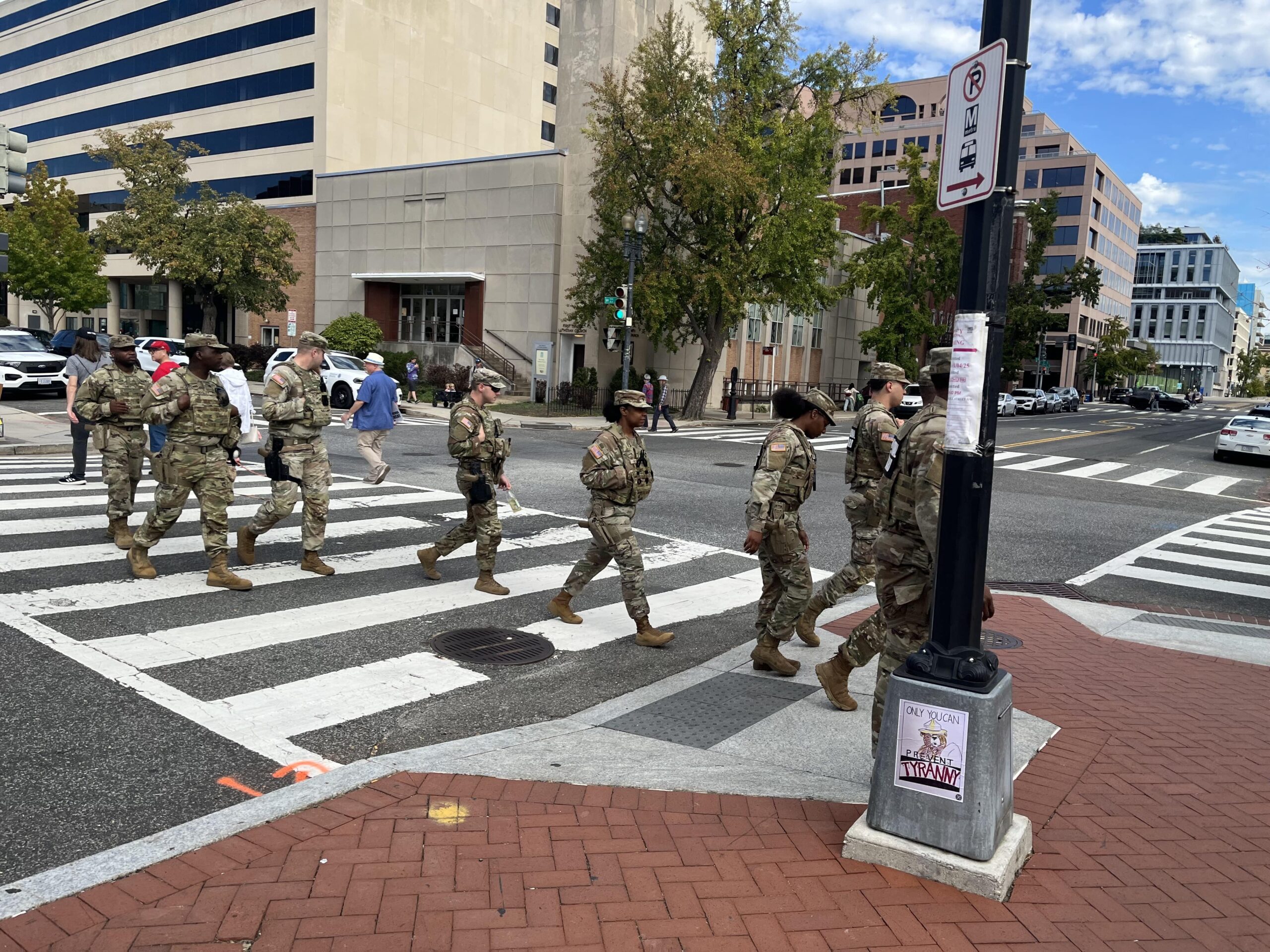
Still Reeling from Months of Raids in D.C., Immigrant Communities Face Another Federal Surge
As armed patrols of federal agents receded in D.C., residents began adapting to a more ominous reality—one characterized by masked figures in unmarked cars, and a deep uncertainty over what comes next.

December 5, 2025
No Kings Rallies Continue Nationwide
Millions of demonstrators came together in across the nation as part of the most recent “No King” protests, voicing anger over federal policies regarding immigration, education, the economy, and healthcare.