February 20, 2026
Categories
Business & Economy, Business & Technology, Community, Economy, Environment, Features, Government, Health & Science, News & Politics
Tags
Share
(PERRIS, Calif.) — Perris, an inland city known for open landscapes — where goats, sheep and horses once roamed across meadows covered in wildflowers—is now home to more than 100 industrial buildings.
When warehouses first appeared in the SoCal city outskirts, the community welcomed them as engines of prosperity. Later, the eagerness shifted to distress, and today, many residents are calling for a permanent ban on the enormous buildings used for fulfillment and distribution centers.
During the last City Council meeting of 2025 on Christmas Eve, Perris residents learned that the rural town was temporarily suspending approval of new warehouse construction. On Jan. 13, the five-member city council voted unanimously to extend the moratorium to 10 months, blocking the development of more than a dozen industrial proposals that would cover approximately 13 million square feet of industrial space.
The nearly yearlong land use restriction is also foreshadowing a potential halt to one astronomical logistics facility still in the planning stages—a business park that is threatening the alarmed residents with the consumption of 14,858,322 square feet of their city. In recent months, citizens and local government officials in the city of Perris have held a series of meetings where the main topic of debate has been the blocking of warehouse expansion across the city— housing a population of 83,032, with 78.3% of residents identifying as Latino.
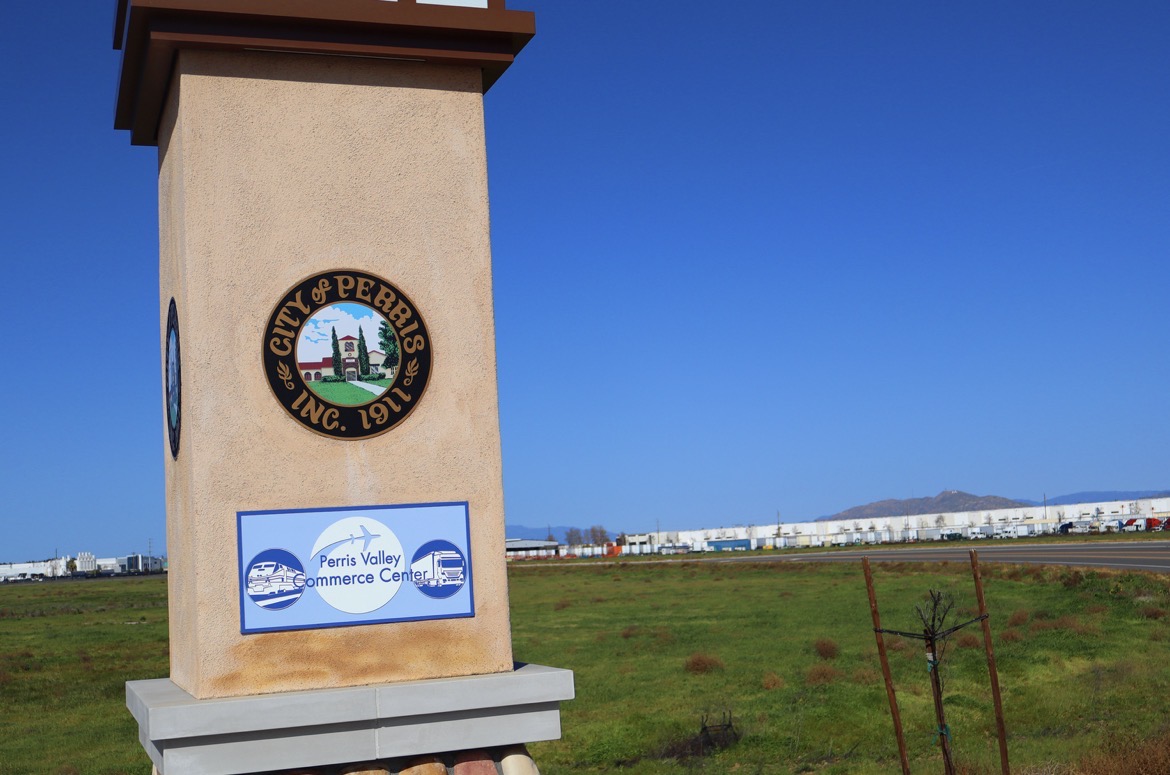
Perris’ agricultural landscape has been transformed through urbanization fueled by mega warehouses like the one in the Perris Valley Commerce Center. [Credit: Cristiano Vasquez]
The change has been rapid. In the last five years alone, the city of Perris has approved some 60 warehouses.
Residents resent the increase in truck traffic, damage to local infrastructure, environmental concerns, and public safety issues, including diseases and overpopulation, as key factors driving community backlash.
At a Dec. 9 Perris City Council meeting, Councilmember and former Mayor Pro Tem David Starr Rabb and residents spoke in opposition to what Rabb described as violations of the city’s zoning code. “Let’s talk about demographics, warehouses are being built in the backyard and schools of Latino neighborhoods,” Rabb said. “If the majority in these neighborhoods were white, would these projects have been approved? And we all know the answer to that, and we can no longer hide behind that,” he added.
We have been asking for sit‑down restaurants, hotels, and theaters — instead, people get another warehouse,
Many Perris residents echo Rabb’s concerns, including Franco Lucilo Pacheco, 32, a lifelong Perris resident, environmental activist and founder of the nonprofit Inland Valley Alliance for Environmental Justice. Pacheco said that members of local government siding with community members to oppose warehouse proliferation is a pivotal moment. “I applaud Rabb for changing his stance because he has been historically a proponent for warehousing,” he said.
Pacheco, who frequently attends warehouse moratorium meetings across the Inland Empire to document council proceedings while carrying a camera and notebook, said he believes warehouse growth in Perris represents a case of environmental racism. He argued that former Perris council officials acted irresponsibly by prioritizing giant e-commerce fulfillment centers — some larger than one-million square feet from companies like Amazon and Home Depot — over the public welfare. He said those decisions resulted in recorded evidence of people being diagnosed with respiratory illnesses and cancer linked to indirect exposure to hazardous industrial emissions. In response to a request for comment, Amazon said it would not be responding at this time.
Watch: Cristiano Vásquez reports on the warehouse controversy
“I do agree with Rabb when he says warehousing wouldn’t be proposed in white neighborhoods because they have a lot more resources,” Pacheco told The Click.
Guadalupe “Lupe” Gomez is another strong voice opposed to land industrialization at the Perris City Council meetings. Gomez served on the city’s Planning Commission for three years, but was removed from office for speaking out, she said. At an August 2024 planning commission meeting, Gomez criticized the city’s handling of warehouse approvals as failures of leadership. She said that leadership had “let residents down,” by overturning planning commission decisions and prioritizing warehouse development over major opportunities such as the proposed Lake Perris 2028 Olympic venue.
Gomez’s comments were labeled “disparaging remarks” at Perris Hall, and months later, she was fired. “It was in full retaliation because I didn’t agree with the decisions that had been made,” she said.
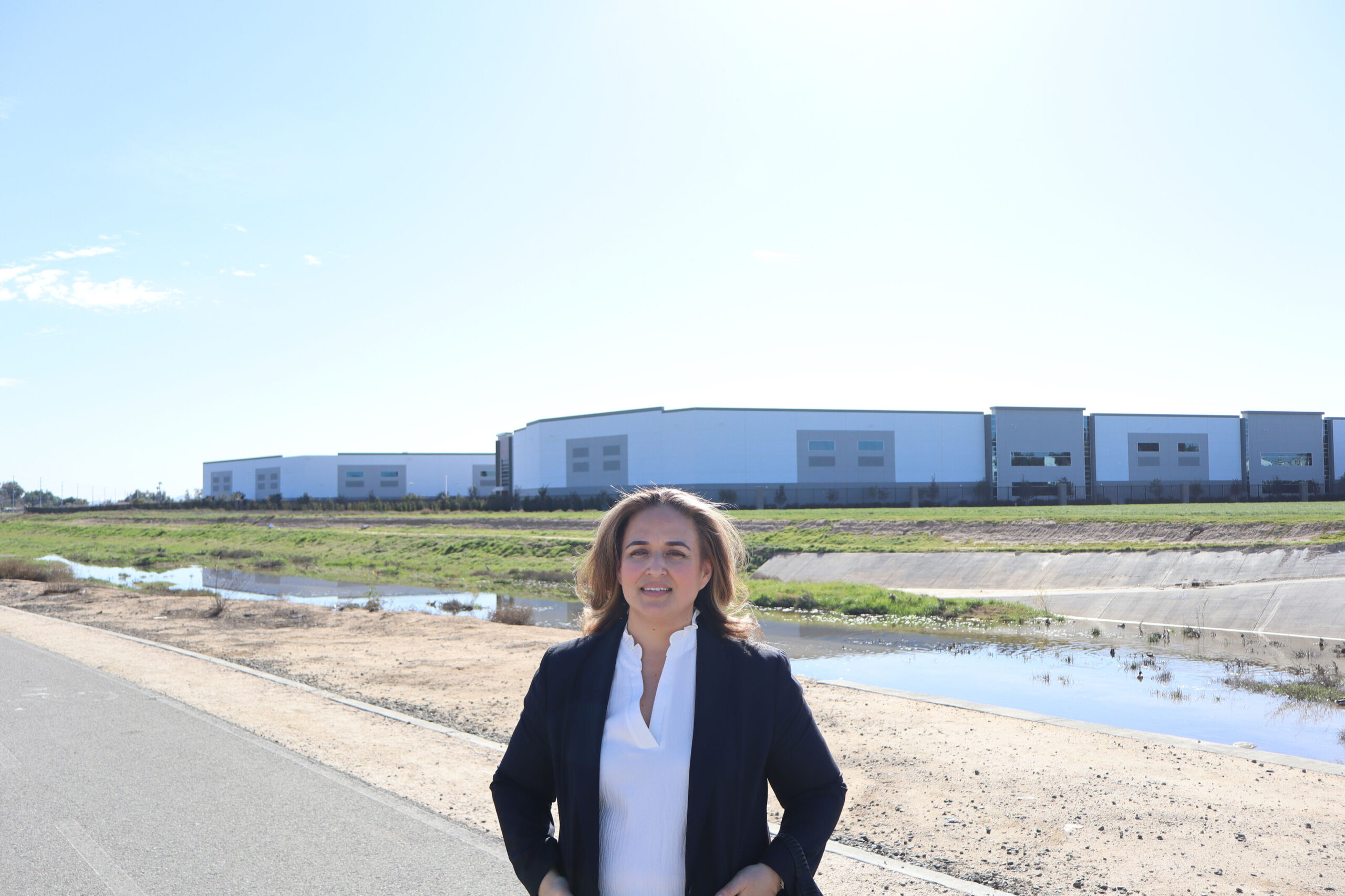
Former Perris Planning Commission member Lupe Gomez is leading efforts to block the development of more mega-warehouses in the once-rural city. [Credit: Cristiano Vasquez]
How is it possible that a park is boxed by shipping containers?
Gomez praises Perris’ collective organizing and what she described as residents rising to confront industrial developers to protect their land. “Even with the language barriers, residents show up and speak out — I wish I had done more when I was a city commissioner,” Gomez said, her voice tinged with regret.
Other inhabitants of the now-heavily industrialized Perris say public safety, the rural character, and traditional community values are crumbling as warehouse development expands. Some also point to zoning violations and an influx of newcomers drawn by logistics jobs as contributing factors.
“I have lived in Perris for 30 years, and I’ve never seen such a constant police presence on the streets and sometimes even in helicopters as in these last few years,” said Fernando Martinez, 50, as he played with his toddler granddaughter at the park on a cloudy Sunday.
“I don’t go out anymore at night, and even coming to the park to spend time with family feels unsafe,” Martinez said. Nearby, a parked red truck with its doors open blasted loud music as a small group smoked marijuana and drank beer.
“How is it possible that a park is boxed by shipping containers?” he asked, pointing to a towering stack of cargo units just feet away from the park playgrounds. Martinez fears that industrial growth could drive up housing and living costs, explaining that Perris remains attractive to residents because it is more affordable than many cities in Riverside County.
But some pro‑warehouse Perris residents continue to attend City Council meetings to voice their support, arguing that warehouse jobs offer convenient and accessible employment for local workers. Among them was Jess Ellings, who urged city officials to reject a proposed moratorium on warehouse construction. He claimed that new developments incorporate high‑efficiency technologies while Perris can advance economic growth and environmental safety simultaneously. “Projects like these strengthen local employment while helping residents stay closer to home, reducing stress and improving overall well‑being,” Ellings said.
Next to Perris is the town of Mead Valley, where it’s common to see neighbors talking to one another over front-yard fences along dirt roads, reflecting a strong sense of community.
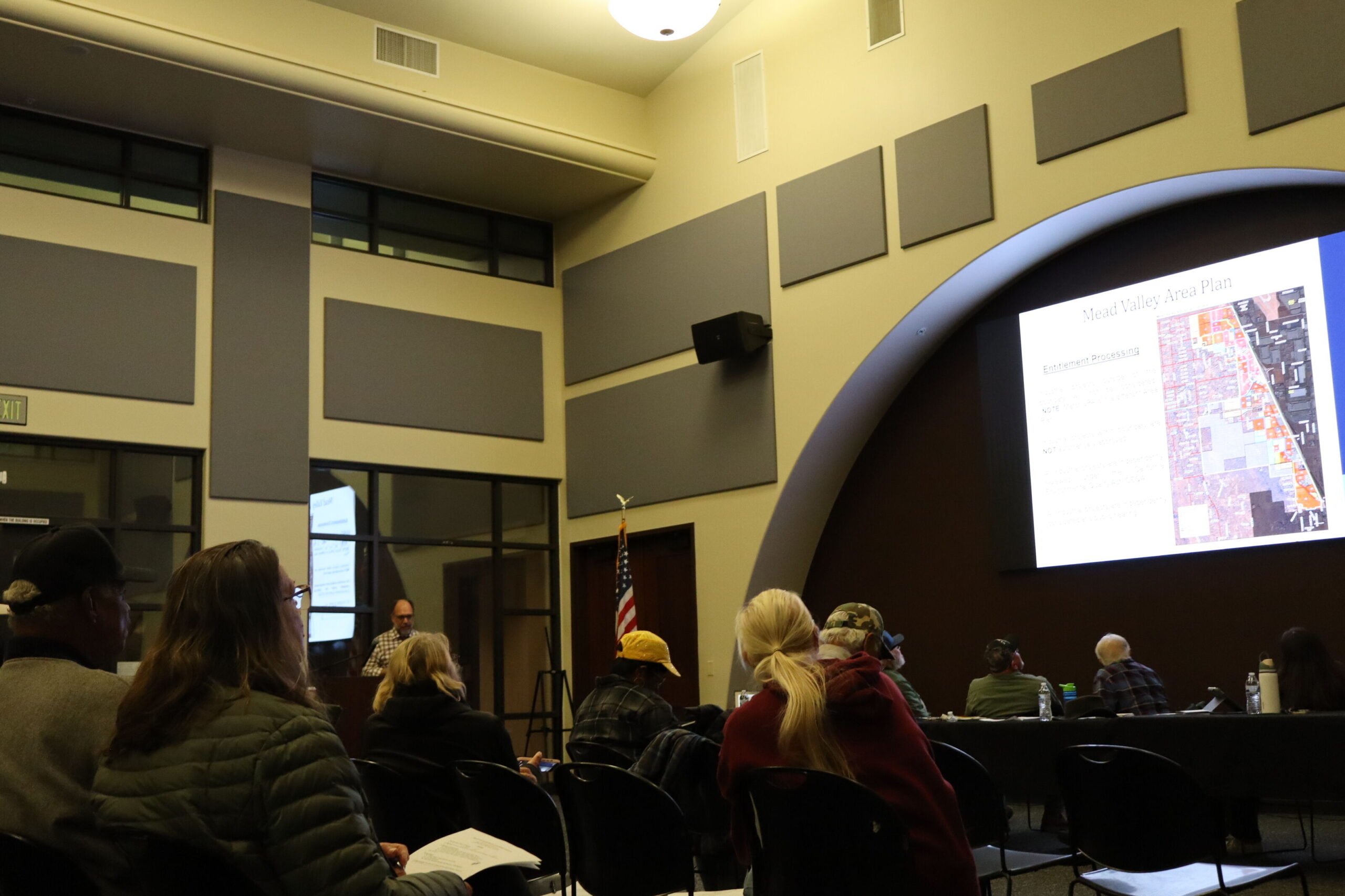
Community members gather to push back against warehouse expansion across the Inland Empire. [Credit: Cristiano Vasquez]
“I have to keep my house under surveillance at all times,” Maricela added. That night, she attended a community meeting to speak out against industrialization through a Spanish interpreter. In 2008, Amazon introduced its CamperForce program, designed to promote seasonal employment for nomadic workers living in RVs. Although the program was discontinued in December 2022, many mobile warehouse workers have continued to adopt this lifestyle.
Maricela said she feels defeated after years of opposing warehouse development, remarking that local government continues to prioritize doing business with foreign investors, including Chinese companies seeking to expand industrial development in Mead Valley.
Indeed, Rabb said warehouse expansion reached an inflection point over the past six years. “In 2020, when COVID-19 hit, there was little public scrutiny; people were working from home, and many of these projects were pushed forward during that time,” Rabb said.
A 2021 study by the University of Redlands found that Perris housed 45 warehouse facilities. Data provided to The Click by the Perris Planning Division indicates a remarkable increase, documenting a total of 167 industrial facilities in Perris by the start of 2025, including 147 classified as warehouses. Between 2020 and 2025, the Perris government consented to the construction of 60 logistic projects. In 2023 alone, the Perris city officials approved 17 industrial buildings. Many of these warehouses are distribution centers operating fleets numbering in the hundreds of delivery trucks that parade daily through Perris, emitting pollutants.
Rabb urges the public to educate themselves about online shopping and the vast harm one-click purchases are causing to Perris. “People keep ordering online because it is easier than going to Kohl’s or JCPenney,” Mr. Rabb said. “While the high demands exist, these warehouse projects won’t stop menacing our city,” he added.
Despite Perris adopting an ordinance on January 13 imposing size restrictions on warehouse buildings—requiring logistics facilities larger than 50,000 square feet to be subjected to local government review — residents say a long road remains toward securing stronger warehouse regulations in the city. In 2024, Perris won a legal dispute against the neighboring city of Menifee and a court order halted two large-scale industrial projects that Perris officials said would have increased environmental damage.
It would be detrimental for Perris if ICE obtains a mega warehouse and utilizes it as a prison camp in a Latino city.
Professor Alfonso Gonzales Toribio, an ethnic studies scholar at University of California, Riverside, affirmed that the expansion of warehousing in Perris represents a form of environmental racism and a violation to a region populated predominantly by Hispanic immigrants who have lived a rural way of life similar to their places of origin.
While warehouse moratoriums are a step forward, Gonzales Toribio says they are not a permanent solution. “Community groups and activists must continue organizing and applying pressure to secure stronger regulations on industrial development in Perris,” he said, citing Redlands as an example of permanently banning warehousing. On Nov. 18, the Redlands City Council voted unanimously to advance an ordinance that would permanently ban the construction of new warehouses citywide.
The UCR academic warns that industrial cities are drawing attention from the U.S. Department of Homeland Security, with reports showing that federal authorities have been acquiring large warehouse facilities around the country to convert them into detention centers for immigrants.
“It would be detrimental for Perris if ICE obtains a mega warehouse and utilizes it as a prison camp in a Latino city,” Gonzalez Toribio remarked. The Washington Post reported on Immigration and Customs Enforcement buying warehouses in states like Arizona, New York and Florida to operate them as mass detention networks while the U.S. faces one of the most aggressive immigration crackdowns in modern history.
As industrialization conspires to overtake what remains untouched of Perris’ 31.6 square miles, activists like Pacheco and Gomez are preparing for their next battle against the gigantic Harvest Landing project, which is scheduled to be presented to the Perris City Council for a vote in February. While Pacheco is advocating for a land-use reform that would impose size limits and zoning restrictions on warehouse facilities, Gomez, who hinted at a potential run for office in the near future, wants a permanent ban on new industrial proposals.
“I think we are good, Perris is built out already and we don’t need any more warehouses,” she said.
Related Posts
March 31, 2026
Pain at the Pump: NYC Taxi Drivers Squeezed by Rising Gas Costs
Oil prices have surged amid the war with Iran and disruptions to global supply routes, driving gas prices higher worldwide. In New York City, Taxi and ride-share drivers are feeling the squeeze, as rising fuel costs cut into already tight earnings.
March 9, 2026
The Economic Ripple Effects of Slowing Immigration
How an immigration slowdown could reshape the U.S. Economy.