Another Generosity, an installation in the The Designs for Different Futures exhibition at the Philadelphia Museum of Art, contains inflatable spheres of water, air, and sensors that react directly to carbon dioxide from people breathing (Source: Michael Haley)
PHILADELPHIA — Who should control information? Is an ethical food chain possible? Can a robot raise a baby? What do we need for life off Earth?
“Designs for Different Futures” a new exhibition at the Philadelphia Museum of Art, examines these questions, showing how technology is transforming how future humans will interact with data, food, cities, power, and other aspects of daily life.
But the exhibit that really transforms visitors’ minds is the Futures Therapy Lab, a place to ponder and respond to the ideas raised by the larger exhibition.
The lab, situated in the exhibition as visitors leave, provides a location for “conversation, critique, and creativity for those considering the ideas set forth in the exhibition,”according to the museum’s website.
Lab educators offer an arts creation station, library, and reading section, along with “The Designer Is In” consultation sessions, where visitors are able to reflect on the exhibit with artists and designers.
“We want the Futures Therapy Lab to relay open conversations and reactions from the exhibit while producing art to remember objects in our past,” said Angela, who asked to be identified by first name only, one of the lab educators.
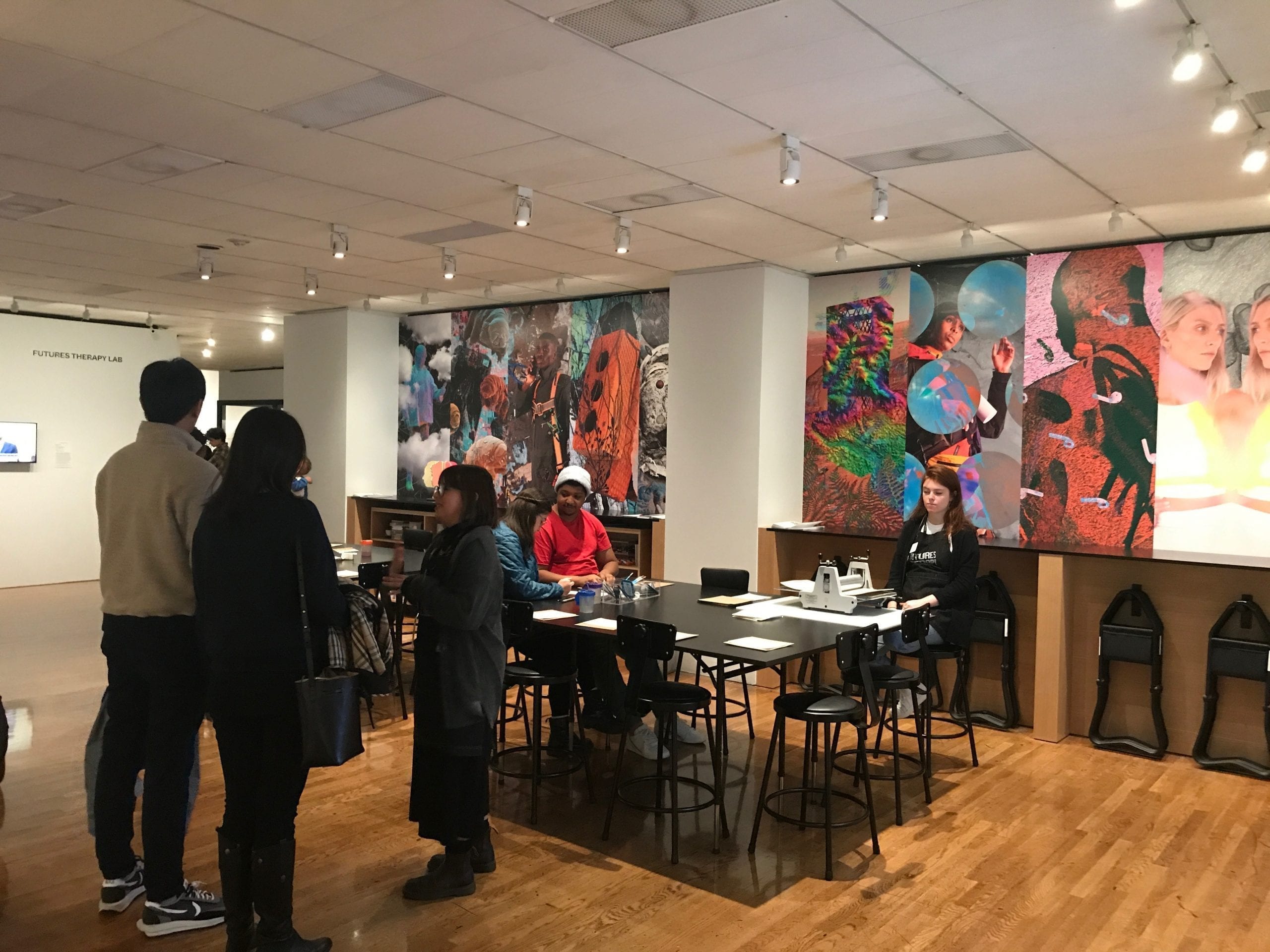
 The Future Therapy Lab Arts Creation Station (Source: Michael Haley)
The creation stations include a push printing press using objects humans may cease to see in the future, from SEPTA subway tokens to Altoid mint cases to copper metal gears. “The future is opposite of obsolete,” Angela explained about the labs art creations, “but we want to create art through the help of these obsolete objects that may change or disappear.”
Keeping the same theme as the exhibit, the lab’s library is home to books on design and the future, from Aldous Huxley’s dystopian novel Brave New World to a collection of biotechnology created meat recipes in The In Vitro Meat CookBook, allowing visitors to learn more about futuristic topics and unwind after viewing the exhibition’s vast amount of tech-driven art.
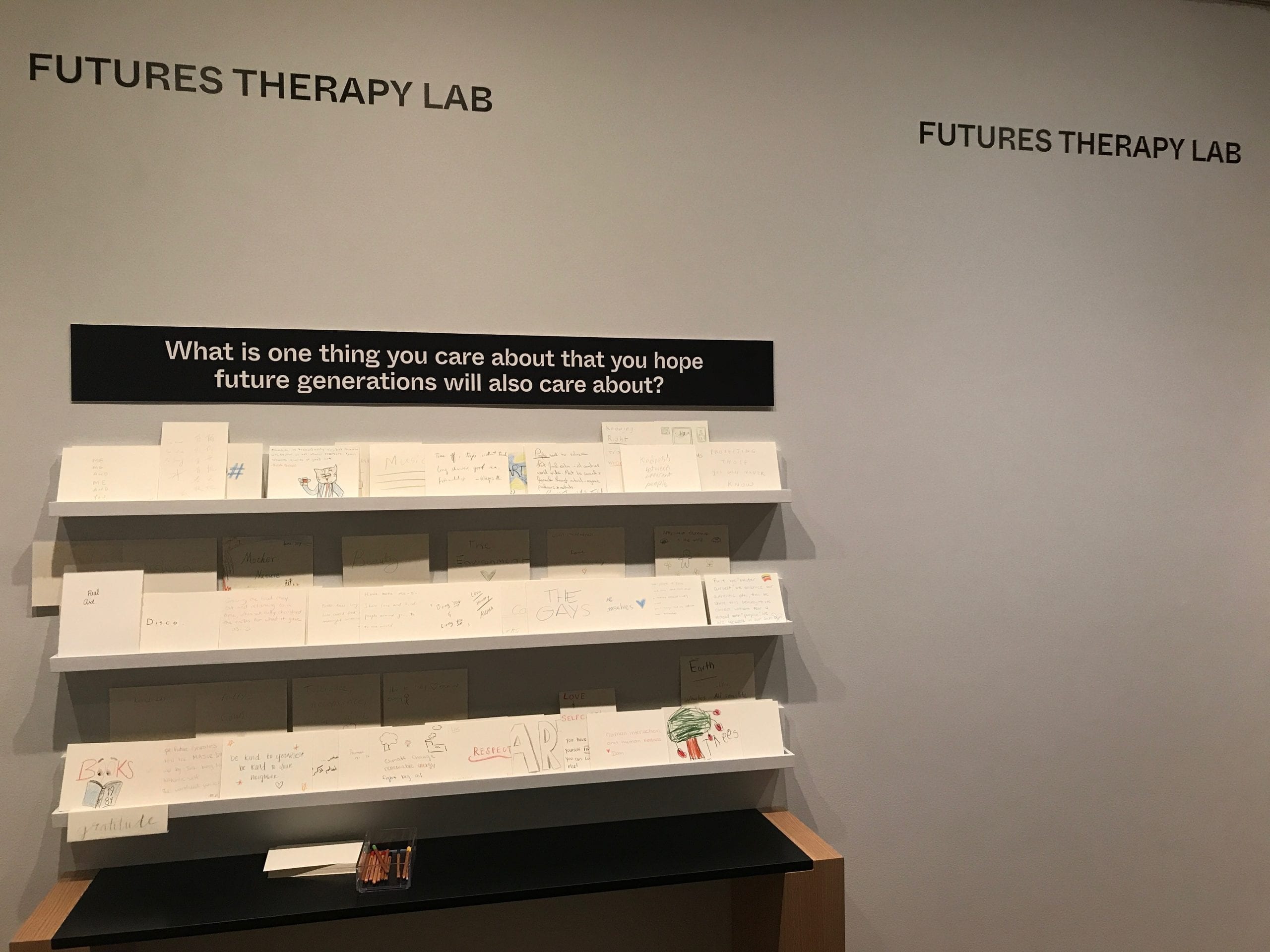

Visitors are encouraged to express their feelings on the future through art (Source: Michael Haley)
The “Designer Is In” sessions allow visitors to meet with a designer-in-residence for an open- ended conversation sharing personal ideas, thoughts, or reactions to the exhibit.
Maia Chao, an interdisciplinary artist and co-founder of Look at Art. Get Paid., a socially engaged art project that pays people who don’t visit art museums to visit one as a guest critic, is a designer-in-residence at the lab. Chao has met with visitors young and old experiencing the exhibit with varied reactions and perspective on the future.
“Older folks have felt like they are at the beginning of something interesting,” Chao explains, “while others may not want to see the transformation and impact technology has on our future.”
Whether it’s extracting DNA from chewing gum to create plastic human face replicas or starring a robot in the eye that can detect emotion and body language, the exhibition provokes thought on the future through design, while fostering dialogue on futuristic change through the therapy sessions.
The future may be terrifying, but the Future Therapy Lab helps visitors accept and perhaps even welcome that future.
Related Posts
October 8, 2026
At 53, Simone Is Reinventing Her Life — Again
After teaching Portuguese for three decades, it's time for something different.

September 10, 2026
Simon and Fannie’s Story: A Tablecloth, a Family Mystery, and Me
I knew that my great-grandfather and his younger brother immigrated from Poland to the U.S. in 1922 when they were only 19 and 17. I did not know the tragic story of the family who were supposed to come with them until I found a photo behind a picture frame.