(HOUSTON) — Changing your legal name is burdensome and time consuming. It is also the reason — despite months of paperwork and patience — I was ineligible to vote in Texas until the Sunday before Election Day.
And as usual, I wanted to vote. This year’s midterm elections in Texas feature two of the nation’s most highly contested and high stakes races with Democrat James Talarico running against former Texas Attorney General Ken Paxton, a Republican, for the US Senate. Democrat Gina Hinojosa is looking to unseat Republican Gov. Greg Abbott. A win for Democrats in both races could move the state from deep red to a pale purple, and a Paxton win could help Republicans maintain their slim advantage in the Senate.
Texas is also a state embroiled in accusations of politicized gerrymandering and voter-roll purging. According to a press release from Abbott’s office, Texas has “the strongest election laws in the nation to protect the right to vote and to crackdown on illegal voting,” and “The Secretary of State and county voter registrars have an ongoing legal requirement to review the voter rolls, remove ineligible voters, and refer any potential illegal voting to the Attorney General’s Office and local authorities for investigation and prosecution.”

A VoteTexas.gov ad lists the types of ID required to vote. [Credit: VoteTexas.gov]
I wasn’t sure how Texas’ oversight of voter rolls might affect my quest to vote, but I was determined to clear all hurdles by Nov. 3.
I knew it would be hard to change my legal name. Not difficult, but time consuming, annoying and the kind of task that makes you want to pull your hair out on more than one occasion as you’re reminded how antiquated the concept even is. I put it off until last year in order to have the same last name as the rest of my family as we update our passports. I didn’t realize that saying “I do” meant I don’t get to vote. It is 2026, afterall.
To get the job done, I have gone to a lot of trouble from flying to New York to appearing in person at Texas government offices, to waiting months without receiving word. In all of this, I had one goal, not to jeopardize my ability to vote.
The red tape part of the process started off OK. You begin by applying for your new name via the federal government in order to update your social security number. Then you use that to get your new photo IDs like your license and passport. But when the polls opened for early voting on October 19, I found that the state of Texas had maintained my old name on my voter registration. My valid photo ID no longer matched the state voting registry, and I could not vote like I have done without incident for the last six years.
According to the rules, I could use my voter registration certificate as my ID and under the “penalty of perjury” sign a Reasonable Impediment Declaration indicating that I was prevented from obtaining a legal ID. The form does not offer any impediment reason that applies to me, citing only reasons like ‘lack of transportation’ or ‘disability’ and there is no write-in option. Not to mention I do have a valid ID, it just doesn’t match the name in the Texas voter registration records.
I couldn’t use the form unless I lied — to the federal government.
By now I had been working to change my name for 11 months. Planning the wedding that led to this entanglement was quicker.
In December 2025, I flew to New York City to get certified copies of my marriage certificate. I then made an in-person appointment at my area Social Security office to present all my documents and request an update to my Social Security card. The appointment on March 10 went seamlessly. Upon receiving my new Social Security card with my new name, I immediately went to the DMV to obtain a new Texas driver’s license. At this appointment I confirmed that I was a registered voter. By the end of the month both the federal government and the state of Texas issued me new, official identifications with my new legal name.
Fast forward to October and the opening of early voting. I checked my eligibility through the Secretary of State’s website and confirmed that my registration was still active, but with one major flaw—my legal name had not been updated.
I do not qualify for a mail-in ballot in the state of Texas. I have to vote in person and present one of the seven forms of acceptable identification at the polls.
Those include a:
- Texas Driver License issued by the Texas Department of Public Safety (DPS)
- Texas Election Identification Certificate issued by DPS
- Texas Personal Identification Card issued by DPS
- Texas Handgun License issued by DPS
- US Military Identification Card containing the person’s photograph
- US Citizenship Certificate containing the person’s photograph
- US Passport
I have a license issued by the Texas Department of Public Safety (DPS) but it does not match my old name on the voting registry.
As soon as I discovered the error, I took the steps necessary to update the registry online. Weeks passed with no progress, and I grew increasingly frustrated.
On October 30, the last day of early voting, I wasn’t any closer to voting. After doing everything to avoid this exact situation I was left with no choice but to hope that in the final 48 hours—after a seven month wait— the state of Texas would finally update the name associated with my active voter registration ID.
In an unexpected and welcome turn of events, checking my status on November 1 revealed it has finally been updated and now my registration details match my current driver’s license, just in time for Election Day.
I don’t know the reason the registration was updated after such a long delay. It seems like doing the process online could have been a more effective option in the end. What I know for certain is we are all responsible for being our own advocate in making sure our vote counts, and you can never be too careful.
Special Report: Election 2026: The US Midterms
November 3, 2026
Virginia Voters Decide on Reproductive Rights Amendment
Question 1 asks whether reproductive freedom should be written into Virginia’s constitution, potentially changing abortion restrictions and parental consent laws.
November 3, 2026
Virginia Voters Decide Who Regains Voting Rights After Prison
Question 3 would restore voting rights after incarceration without the governor's approval. A federal court ruling has already changed eligibility for many Virginians.

November 3, 2026
Virginia Voters Reconsider 20-Year-Old Same-Sex Marriage Ban
Virginia voters approved the ban in 2006. Though unenforceable today, it remains in the state constitution. Question 2 gives voters a chance to remove it.
November 3, 2026
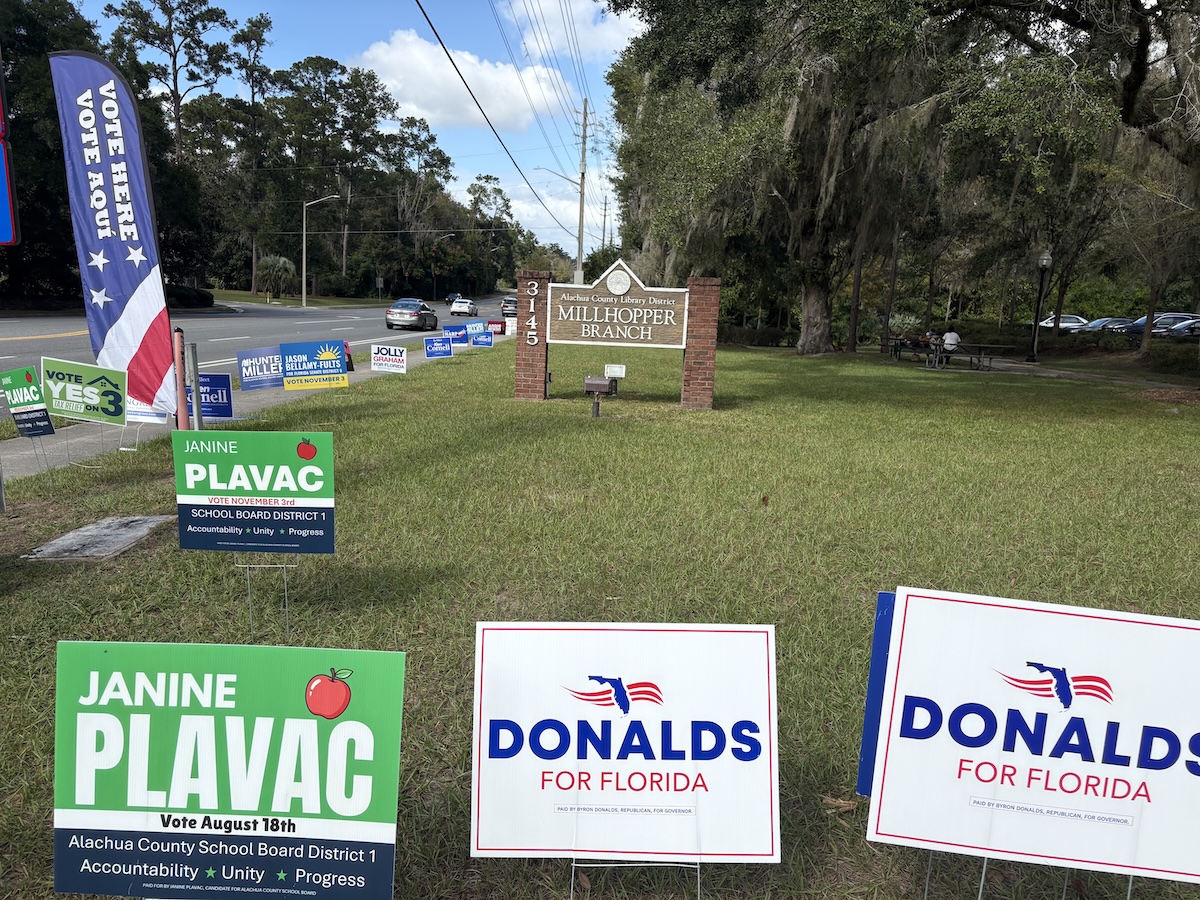
Gainesville Voters Head to the Polls as Florida Decides Key Midterm Races
As voters made their way to polling places across Gainesville on Tuesday, the 2026 midterm elections brought a mix of local and statewide decisions to the ballot. From the race for Florida governor to local county commission and school board contests, voters faced choices that could shape the direction of their communities and the state.
November 2, 2026
Midterms 2026 Live Blog
With over 50 million early ballots already cast, The Click reporters cover some of the biggest races in the 2026 Midterm Elections.